
Kumbh Guide / Places to Visit
Beyond the Ghats

15 Places to Visit in Nashik

Beyond Ramkund and Trimbakeshwar, Nashik is home to dozens of historic temples, ghats, caves, and landmarks worth visiting during your Kumbh Mela trip. Here are 15 of the most significant.

Quick Answer

Beyond Ramkund and Trimbakeshwar, the top places to visit in Nashik are Kalaram Mandir, Sita Gufa, and Kapaleshwar Mahadev in Panchavati (all walkable from the ghats), plus Pandavleni Caves and Saptashrungi Mata Mandir for a dedicated half or full day trip. This guide covers all 15, with categories and best-time-to-visit guidance.

🛕 Temples 🏹 Ramayana Heritage 🕳️ Caves & Heritage 🌊 Ghats & Ritual ⛰️ Nature & Trekking
Dutondya Maruti idol, Nashik
1. Dutondya Maruti
A rare, unusual Hanuman idol near Ganga Ghat depicted with two faces ("Dutondya" means two-faced) — one of Nashik's most distinctive and photographed temple landmarks.
Photo: Virajnene95 / Wikimedia Commons, CC BY-SA 4.0
Kapaleshwar Mahadev shrine, Nashik
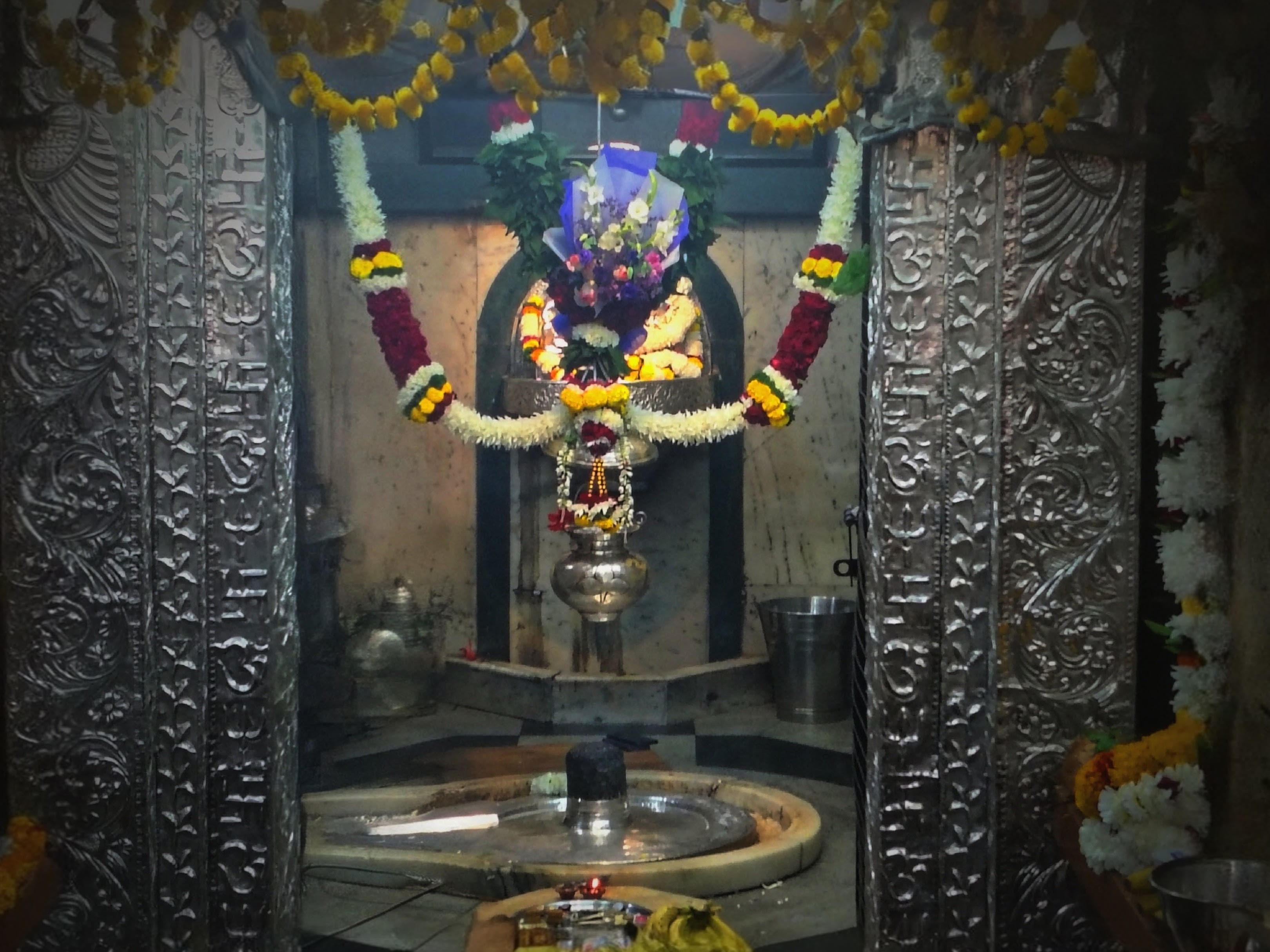
2. Kapaleshwar Mahadev
An ancient Shiva temple near Ramkund in Panchavati, notable among Shiva temples for having no Nandi (bull) statue at its entrance — local tradition holds this is because Shiva is believed to have cursed the bull here.
Naroshankar Mandir, Nashik
3. Naroshankar Mandir
A Shiva temple built in 1747 by Sardar Naro Shankar Rajebahaddur on the banks of the Godavari, best known for the massive bronze "Naroshankar Ghanta" (bell) that hangs at its entrance.
Photo: AnandKatgaonkar / Wikimedia Commons, Public Domain
Saptashrungi Devi Temple, Vani, Nashik
4. Saptashrungi Mata Mandir
One of the three-and-a-half Shakti Peethas of Maharashtra, this Devi temple sits atop Saptashrungi Gad hill near Vani, about 60 km from Nashik, reachable by a scenic ropeway/funicular up the hillside.
Photo: AmitUdeshi / Wikimedia Commons, CC BY-SA 3.0
Goda Ghat, Nashik
5. Goda Ghat Aarti
A daily evening Godavari Aarti ceremony performed at Goda Ghat, in the same devotional tradition as the Ganga Aarti at Haridwar and Varanasi — a peaceful, recommended way to end a day of darshan.
Photo: Prashant Kharote / Wikimedia Commons, CC BY-SA 4.0
Someshwar temple, Nashik
6. Someshwar
An ancient riverside Shiva temple on the Godavari, set beside a popular garden and boating spot — a calmer, greener stop away from the busier central ghats.
Photo: Prabirghose / Wikimedia Commons, CC BY-SA 4.0
Lord Rama statue, Tapovan, Nashik
7. Tapovan & the Ram Pratima
Tapovan, on the Godavari's bank, is traditionally believed to be where Lord Rama, Sita, and Lakshman spent part of their exile — marked today by a large Ram statue (Ram Pratima) and riverside temples.
Photo: Rangnath Wakchaure / Wikimedia Commons, Public Domain
Shri Swaminarayan Mandir, Nashik
8. Swaminarayan Mandir
A modern, ornately carved temple of the Swaminarayan Hindu sect, founded by Bhagwan Swaminarayan in Gujarat — known for intricate architecture and community cultural programs, a good stop on a broader temple-hopping itinerary.
Photo: Swapppp57 / Wikimedia Commons, CC BY-SA 4.0
Jain Mandir, Nashik
9. Jain Mandir
A prominent Jain temple in Nashik reflecting the city's multi-faith religious landscape, known for its detailed marble work and quiet, contemplative atmosphere.
Photo: Gauravghosh24 / Wikimedia Commons, CC BY-SA 3.0
Dadasaheb Phalke Smarak, Nashik
10. Dadasaheb Phalke Smarak
A memorial near the Pandavleni Caves honouring Dadasaheb Phalke, widely regarded as the father of Indian cinema — a worthwhile cultural stop for pilgrims combining faith with Nashik's heritage.
Photo: Laurawtn / Wikimedia Commons, CC BY-SA 4.0
Navsha Ganapati temple, Nashik
11. Navsha Ganapati
One of Nashik's oldest and most revered Ganesh temples, popular with locals for its long-standing tradition of granting "navas" (vows/wishes) — a well-loved stop before starting a pilgrimage.
Photo: Mahi29 / Wikimedia Commons, CC BY-SA 4.0
Pandavleni Caves, Nashik
12. Pandavleni Caves
A complex of 24 ancient rock-cut Buddhist caves about 8 km south of Nashik, dating mainly to the 1st–2nd century CE, with inscriptions recording early Satavahana-era rulers — one of the region's most significant archaeological sites.
Photo: Katyare / Wikimedia Commons, CC BY-SA 3.0
Muktidham Temple, Nashik
13. Muktidham Temple
A striking marble temple complex on Nashik Road, built in 1971 from Makrana marble, housing replicas of all 12 Jyotirlingas and all 18 chapters of the Bhagavad Gita inscribed on its walls.
Photo: K.Venkataramana / Wikimedia Commons, CC0
Kalaram Mandir, Panchavati, Nashik
14. Kalaram Mandir
A black-stone temple in Panchavati dedicated to Lord Rama, and the site of the 1930 Kalaram Temple Satyagraha led by Dr. B. R. Ambedkar for temple entry rights — one of the most significant sites in the history of the anti-caste movement.
Photo: K.Venkataramana / Wikimedia Commons, CC0
Harihar Fort, near Nashik
15. Harihar Fort
A hill fort about 40 km from Nashik near Trimbakeshwar, famous among trekkers nationwide for its dramatic, near-vertical rock-cut stairway carved directly into the cliff face — a full-day trip for the adventurous.
Photo: Yash Borse / Wikimedia Commons, CC0
Want timings, entry rules, or step-by-step directions to any of these? Get detailed information in the AI chat

How to Plan Your Sightseeing Itinerary

Match your available time to a realistic route.

If you have one extra day beyond the ghats: Panchavati's temple cluster (Kalaram Mandir, Kapaleshwar Mahadev, Dutondya Maruti, Sita Gufa) can all be covered on foot in a single morning.

If you have two extra days: add a half-day at Pandavleni Caves and Dadasaheb Phalke Smarak, then dedicate the second day to a Saptashrungi Gad day trip (~60 km, plan for the ropeway).

For trekkers: Harihar Fort is a serious half-day undertaking on its own — plan a dedicated day for it, start early, and avoid the monsoon season for safety on the rock-cut stairway.

For families with young children or elderly members: Muktidham Temple, Someshwar, and the Goda Ghat area are the most accessible, with minimal walking or climbing required.

Frequently Asked Questions

What are the must-visit places in Nashik besides the Kumbh ghats?
Kalaram Mandir, Sita Gufa, and Kapaleshwar Mahadev in Panchavati are the most historically significant nearby stops. Pandavleni Caves and Saptashrungi Mata Mandir are worth a dedicated half-day or full-day trip if you have extra time.
How far is Saptashrungi Mata Mandir from Nashik?
Saptashrungi Mata Mandir, atop Saptashrungi Gad near Vani, is about 60 km from Nashik city and is reachable by road followed by a ropeway/funicular to the temple itself — plan it as a full day trip.
Is Harihar Fort suitable for beginners?
Harihar Fort's famous rock-cut stairway is steep and near-vertical in sections — it's best suited to trekkers with some experience and a head for heights, and is best avoided during the monsoon when the steps get slippery.
Are Pandavleni Caves actually connected to the Mahabharata's Pandavas?
Despite the folk name, archaeological study dates the caves to the 1st-2nd century CE and identifies them as Buddhist monastic caves under Satavahana-era patronage — not a literal Mahabharata-era site. The name reflects centuries of local devotional association rather than verified history.
How many places to visit are there near the Kumbh ghats?
This guide covers 15 of the most significant pilgrim and heritage sites in and around Nashik, ranging from temples a short walk from Ramkund to a full-day trip to Saptashrungi Gad.

Have a specific question?

Our AI assistant can answer questions about any of these places, grounded in the same information on this page.

Ask AI Kumbh
AI Assistant
Travel · Online
Conversation
Live Results
Recording