
Ganesh Chaturthi 2026: Puja Vidhi, Muhurat, Samagri & Katha

Everything you need for Ganesh puja this year — the exact date and muhurat, step-by-step vidhi, the complete samagri list, and the story behind why Ganpati Bappa is worshipped.
Every year, on Bhadrapada Shukla Chaturthi, Hindu homes and streets across India — and especially across Maharashtra — welcome Ganpati Bappa for a ten-day festival of devotion, colour, and community: Ganesh Chaturthi, also called Ganeshotsav. This guide covers everything you need for the puja itself — the exact 2026 date and Madhyahna muhurat, the complete Ganpati sthapana and puja vidhi step by step, the full samagri list, why Ganesh puja is performed at all, and the traditional Ganesh puja katha behind it — in one place.
Ganesh Chaturthi 2026 — Date and Madhyahna Muhurat
Ganesh Chaturthi 2026 falls on Monday, 14 September 2026. The most auspicious window for Ganpati sthapana and puja this year is the Madhyahna Muhurat, from approximately 11:02 AM to 1:31 PM — Madhyahna (midday) is preferred specifically because Lord Ganesha is believed to have been born during this part of the day. Exact minute-level timings shift slightly by city, so it's worth cross-checking your local Panchang before fixing your sthapana time. The festival concludes ten days later, on Anant Chaturdashi, Friday 25 September 2026, the day of Ganpati Visarjan.
Why Is Ganesh Puja Performed?
Lord Ganesha is worshipped as Prathama Pujya — the very first deity invoked before any other puja, undertaking, wedding, or new venture — because he is Vighnaharta, the remover of obstacles, and Buddhi-daata, the giver of wisdom and intellect. Ganesh Chaturthi itself marks Ganesha's birth (his janmotsav), and the ten-day Ganeshotsav that follows lets devotees welcome him into their homes as an honoured guest before bidding him farewell at visarjan.
Ganesha's form is itself a teaching: his large elephant head represents wisdom and the capacity for deep thought; his big ears mean he listens more than he speaks; his small eyes stand for focus and concentration; his large belly signifies the ability to digest both good and bad experiences in life with equanimity; and his mouse (mushak) vehicle represents the ego and desire that even the largest of us must learn to control and ride, rather than be ruled by.
Ganpati Sthapana & Ganesh Puja Vidhi — Step by Step
A day before: Clean and mop the puja space thoroughly. Set up a wooden chowki (platform) draped in a fresh red or yellow cloth, with a few grains of akshat (unbroken rice) placed on it. A kalash filled with water, topped with mango leaves and a coconut, is placed beside the seat.
On the day of sthapana:
- Sankalp: Seat the Ganesha idol on the chowki facing the family, and take a formal sankalp (a spoken intention) to perform the puja with devotion.
- Pran Pratishtha: Invoke life into the idol by chanting “Om Gan Ganpataye Namah” while sprinkling akshat and flowers over it.
- Dhyana & Avahana: With folded hands, meditate on and formally welcome Ganesha as an honoured guest into the home.
- Shodashopachara (16-step worship): Offer, in sequence, asana (seat), padya and arghya (water for the feet and hands), achamana, snana (a ceremonial bath, often with panchamrit), vastra (a small cloth or thread), yajnopavita, gandha (sandalwood paste), akshata, pushpa (flowers), dhupa (incense), dipa (a lit lamp), and naivedya (food offering).
- Haldi-Kumkum and Durva: Apply turmeric and kumkum to the idol, and offer durva grass — traditionally in bunches of 21 blades, believed to be especially dear to Ganesha.
- Naivedya: Offer modak, laddu, or seasonal fruit as bhog.
- Aarti: Conclude with the Ganesh aarti, followed by pushpanjali (a final offering of flowers) and pradakshina (circumambulation).
Many households also recite the well-known invocation before beginning: “Vakratunda Mahakaya Suryakoti Samaprabha, Nirvighnam Kuru Me Deva Sarva-Karyeshu Sarvada” — “O Lord with the curved trunk and mighty form, radiant as a million suns, please make all my endeavours free of obstacles, always.” This same daily routine — a short aarti and a fresh modak or fruit offering — continues every morning and evening for as long as the idol stays at home, right up to visarjan.

Ganesh Puja Samagri — Complete List
- A Ganesha idol — clay or another eco-friendly, water-soluble material is strongly preferred over Plaster of Paris, for a safer visarjan
- A wooden chowki (platform) and a fresh red or yellow cloth
- A kalash, filled with water, with mango leaves and a coconut
- Akshat (unbroken rice grains)
- Haldi (turmeric) and kumkum
- Durva grass (ideally 21 blades)
- Fresh flowers — red and yellow are considered especially auspicious
- Sandalwood paste (chandan/gandha)
- Incense sticks (agarbatti) and a ghee or oil lamp (diya)
- Panchamrit (milk, curd, ghee, honey, sugar) for the ceremonial bath
- A small new cloth or sacred thread (vastra/yajnopavita)
- Modak, laddu, or seasonal fruit for naivedya
- A bell, and an aarti thali with a lit lamp for the closing aarti

Ganesh Puja Katha — The Story of Ganesha's Birth
The most widely told Ganesh puja katha explains how Ganesha came to have an elephant head. Goddess Parvati, wishing for a companion of her own while Lord Shiva was away in deep meditation, fashioned a boy out of turmeric paste and sandal paste from her own body, and breathed life into him. She asked him to guard the entrance while she bathed.
When Shiva returned and tried to enter, the boy — who did not recognise this stranger as his mother's husband — stood firm and refused him entry. Enraged at being stopped in his own home, Shiva, in a fit of fury, severed the boy's head. When Parvati emerged and saw what had happened, she was inconsolable and threatened to destroy all of creation unless her son was restored to life and honoured above every other deity.
To calm her and undo the tragedy, Shiva sent his attendants out to bring back the head of the very first living creature they found lying with its head facing north. They returned with the head of an elephant. Shiva placed it on the boy's body and restored him to life, naming him Ganesha (“lord of the ganas”) or Ganapati, and decreeing — exactly as Parvati had demanded — that he would forever be worshipped first, before every other god, at the start of any new undertaking. This is the origin that Ganesh Chaturthi itself celebrates every year.
The Moon-Curse Story — Why the Moon Is Avoided on Ganesh Chaturthi
A second, equally well-known katha is traditionally narrated on the night of Ganesh Chaturthi itself, as a protective ritual rather than a birth story. After a feast of modaks on his own birthday, Ganesha was riding home on his mouse when the little vehicle stumbled, and Ganesha fell. Chandra, the moon god, watching from the sky, laughed at him.
Hurt and angered by the mockery, Ganesha cursed the moon: whoever looked upon him on Bhadrapada Shukla Chaturthi would be falsely accused of a theft they never committed — a blemish known as Mithya Dosha. Even Lord Krishna, the story goes, once glanced at the moon on this very tithi and was soon wrongly accused of stealing the precious Syamantaka jewel — a controversy he only cleared after a long search and a fierce battle to recover it. Chandra eventually begged forgiveness, and Ganesha softened the curse rather than lifting it entirely: those who accidentally see the moon on this day are advised to listen to or recite the story of the Syamantaka jewel as a remedy, which is why many families still narrate it every Ganesh Chaturthi evening.

Ganpati Visarjan — Anant Chaturdashi 2026
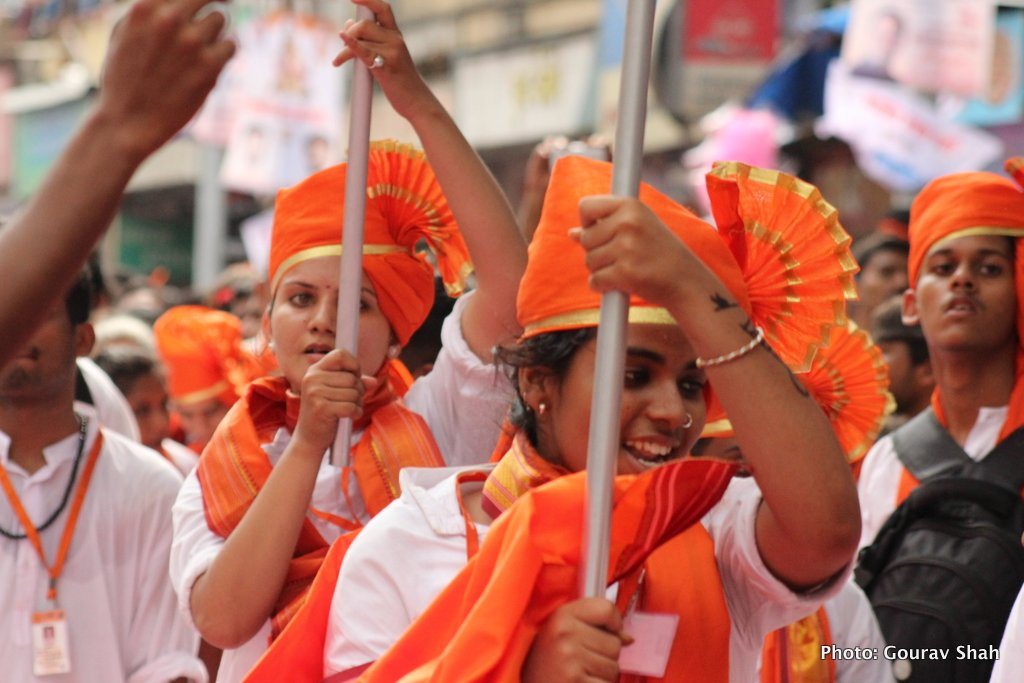
The ten-day Ganeshotsav closes with Ganpati Visarjan on Anant Chaturdashi, Friday 25 September 2026, when the idol is taken out in a festive procession — often with dhol-tasha troupes, dancing, and chants of “Ganpati Bappa Morya, Pudhchya Varshi Lavkar Ya” (“Come again soon next year”) — before being immersed in a river, lake, or the sea. The immersion itself carries the same symbolism as the story of Ganesha's creation from earth: what was formed from clay and elements returns to them, while the devotion offered over the ten days is carried forward until the Bappa returns the following year.
Planning your own Kumbh Mela or Nashik pilgrimage around this festival season? Read about Hanuman and Neem Karoli Maharaj Ji in Nashik or explore the hotels, parking, and event facilities available near Ramkund and Trimbakeshwar.
Sources
- Ganesh Chaturthi 2026: Date & Madhyahna Muhurat Time
- Ganesh Chaturthi 2026: Complete Date, Ganpati Sthapana Muhurat & Visarjan Calendar
- Ganesh Chaturthi Puja Vidhi & Samagri List
- Ganesh Chaturthi Vrata Katha: Stories Behind the Rituals
- The Tale of Ganesha and the Moon
- Ganesh Chaturthi — Festival Date & Time, Drik Panchang
Ready to plan your Kumbh Mela trip?
Book hotels, parking, and event passes near Ramkund in one AI chat.

