Kumbh Mela 2027 Shahi Snan Dates & Bathing Rituals
The Shahi Snan — the royal bathing ritual at the heart of the Kumbh Mela — follows a fixed astrological calendar. Here's exactly when it happens, where, and what to expect if you plan to be there.
The Shahi Snan — literally "royal bath" — is the central ritual event of any Kumbh Mela: a series of astrologically fixed dates on which sadhus, Akharas, and pilgrims take a sacred dip believed to wash away sin and bring spiritual merit. For the Nashik-Trimbakeshwar edition of the festival, known locally as the Simhastha Kumbh Mela, the ritual calendar spans nearly two years, though the three principal bathing dates are what most visitors plan their trip around.
The full Simhastha 2026–2028 calendar
The Nashik-Trimbakeshwar Simhastha Kumbh Mela formally opens with the Dhwajarohan (flag-hoisting ceremony) at Ramkund on 31 October 2026, and the overall event window runs through 24 July 2028. Within that span, three dates carry the greatest ritual weight:
- First Shahi Snan — 2 August 2027
- Second Shahi Snan (Main / Amrit Snan) — 31 August 2027, considered the most spiritually potent of the three
- Third Shahi Snan — 11 September 2027
These are also, unsurprisingly, the three most crowded days of the entire Mela. If your priority is the deepest possible spiritual participation, plan around them — but budget extra time for crowd management, longer queues, and restricted vehicle access near the ghats. If a calmer visit matters more to you than being present on the exact bathing date, the sections below on timing your trip will help you plan around them instead.
Where the bathing happens: two sites, two traditions
Unlike some other Kumbh Mela locations that use a single bathing point, Nashik's Simhastha has two designated Shahi Snan sites, each associated with a different stream of Hindu monastic tradition:
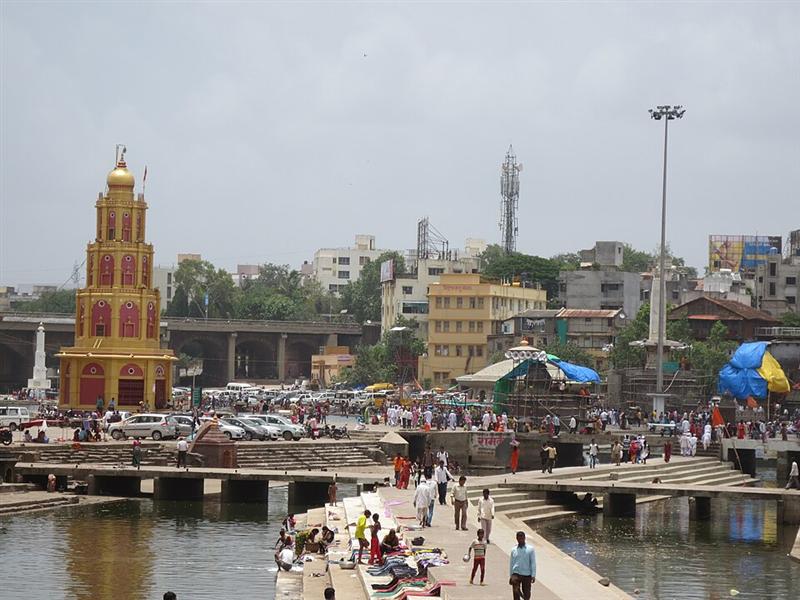
- Ramkund, Panchavati (Nashik) — the Vaishnava bathing site, traditionally believed to be where Lord Rama himself bathed during his years of exile. Vaishnava sadhus and pilgrims gather here.
- Kushavarta Kund, Trimbakeshwar — the symbolic source of the Godavari river, and the bathing site used by Shaiva Akharas. Located beside the Trimbakeshwar Jyotirlinga temple, roughly 30 km from central Nashik.
Because the two sites are geographically separate, pilgrims attending both need to plan travel time between them carefully, especially on the three main Shahi Snan dates when roads around both locations see the heaviest restrictions.
The Akhara procession
On each Shahi Snan date, the bathing follows a strict order of precedence: the Akharas — organised monastic orders of sadhus, some tracing their lineage back centuries — process to the ghats first, in a fixed sequence, before the general pilgrim public is permitted to enter the water. Watching the Akhara procession itself, even without bathing, is a significant part of the Shahi Snan experience for many visitors, and vantage points along the procession route fill up well before the sadhus arrive.
The daily ritual rhythm, beyond the three big dates
The Shahi Snan dates aren't the only ritual events worth knowing about. Nashik's ghats follow a daily rhythm of their own throughout the Mela period — morning and evening Godavari Aarti ceremonies, regular darshan at Kalaram Mandir and Kapaleshwar Mahadev, and ongoing activity at both Ramkund and Kushavarta Kund even on non-Shahi-Snan days. If your travel dates don't align with 2 August, 31 August, or 11 September 2027, you'll still find a full, active pilgrimage experience.
Practical guidance
A few things worth planning around if you're attending on or near a Shahi Snan date: book accommodation as early as possible, since hotels near Ramkund and Trimbakeshwar fill up months in advance of the main bathing dates; expect vehicle restrictions in the inner zones near both ghats, with shuttle services typically running from outer parking areas; and check live crowd forecasts before heading to a specific ghat, since footfall can vary significantly by time of day even within the same Shahi Snan date.
Nashik Kumbh Yatri's crowd forecast tool and live chat can help you time a specific ghat visit, find hotels with real availability near either bathing site, and get last-minute route guidance if roads near Ramkund or Kushavarta Kund are restricted on the day you arrive.
Why these three dates specifically?
The three Shahi Snan dates aren't arbitrary calendar picks. Each falls on a specific tithi (lunar day) identified by Panchang calculations as the point where the Sun, Moon, and Jupiter's position — Jupiter must be transiting Simha Rashi (Leo) for the Mela to qualify as a Simhastha Kumbh — align most favourably. The Second Shahi Snan, falling on Shravan Amavasya (a new-moon day), is considered the single most spiritually potent bathing window of the entire Mela, which is why it draws by far the largest crowds of the three.
The full Simhastha calendar, beyond the three Shahi Snan dates
The Dhwajarohan and the three Shahi Snan dates are the headline events, but the broader ~21-month Simhastha period (31 October 2026 to 24 July 2028) carries its own calendar of smaller Hindu-calendar observances at the ghats — useful to know if you're planning a visit outside the three main dates and want to time it against something meaningful rather than an arbitrary weekday:
- 5 September 2027 — Rishi Panchami
- 15 September 2027 — Bhadrapada Purnima
- 11 October 2027 — Ashwin Shuddha Ekadashi
- 15 October 2027 — Ashwin Purnima
- 10 November 2027 — Kartik Shuddha Ekadashi
- 14 November 2027 — Kartik Purnima
- 26 January 2028 — Mauni Amavasya
- 1 February 2028 — Vasant Panchami
- 27 February 2028 — Maha Shivratri
- 24 July 2028 — Official Conclusion (flag-lowering ceremony)
None of these carry the ritual weight of the three Shahi Snan dates, but each is a working, less-crowded day to bathe and take darshan if your trip doesn't align with 2 August, 31 August, or 11 September 2027.
What actually happens on a Shahi Snan morning
Most pilgrims arrive at the ghats well before dawn — often by 3–4 AM — to claim a position ahead of the day's crowds. The Akhadas process first, in a fixed order of seniority, with Shaiva and Vaishnava Akharas bathing separately at their respective sites; householder pilgrims enter the water only once every Akhada has completed its snan. Flowers, milk, and diyas are commonly offered to the river during or after the bath, and many pilgrims follow their snan with darshan at a nearby temple — Kalaram Mandir in Nashik, or the Trimbakeshwar Jyotirlinga.
What to carry, in brief
A change of dry clothes in a waterproof bag, sandals you don't mind getting wet, a waterproof pouch for phone/ID/cash, and a printed copy of emergency contact numbers cover the essentials for the bath itself. For the full pre-trip packing list, see our Kumbh Mela 2027 packing list.
A note on these dates
The 2027 Shahi Snan dates above reflect the schedule as currently published across Kumbh Mela guides at the time of writing — not yet a primary confirmation from the Kumbh Mela Pradhikaran this far ahead of the event. We'll update this page the moment an official schedule is issued; until then, treat these as reliable planning guidance and do a final check via official channels as your trip date approaches.
Frequently Asked Questions
Why are there three separate Shahi Snan dates instead of just one?
Each date falls on a specific tithi (lunar day) that Panchang calculations identify as astrologically significant for a Simhastha Kumbh — when the Sun, Moon, and Jupiter's position align favourably, with Jupiter transiting Simha Rashi (Leo). The Second Shahi Snan, on Shravan Amavasya, is considered the most spiritually potent of the three and draws the largest crowds.
Are the 2 August, 31 August, and 11 September 2027 dates officially confirmed?
They reflect the schedule currently published across Kumbh Mela guides at the time of writing, not yet a primary confirmation from the Kumbh Mela Pradhikaran this far ahead of the event. Treat them as reliable planning guidance and do a final check closer to your travel date.
What other festival dates fall within the Kumbh Mela period besides the three Shahi Snan dates?
The roughly 21-month Simhastha period (31 October 2026 to 24 July 2028) includes several smaller Hindu-calendar observances at the ghats — among them Rishi Panchami (5 Sept 2027), Mauni Amavasya (26 Jan 2028), and Maha Shivratri (27 Feb 2028). None carry the ritual weight of the three Shahi Snan dates, but each is a quieter day to visit.
Do I need to visit both Ramkund and Kushavarta Kund, or is one enough?
It depends on your tradition and interest — Ramkund (Nashik) is the Vaishnava site, Kushavarta Kund (Trimbakeshwar, ~30 km away) is the Shaiva site. Many pilgrims visit only one; those who want both should plan the travel time between them carefully, especially on the three main Shahi Snan dates when roads near both sites see the heaviest restrictions.
What time should I arrive at the ghats on a Shahi Snan day?
Most pilgrims arrive well before dawn, often by 3–4 AM, ahead of the day's crowds. The Akhadas process and bathe first in a fixed order of seniority, and householder pilgrims enter the water only after every Akhada has completed its snan.
Sources
- Nashik Kumbh Mela 2027 — Independent Guide: Dates & Schedule
- Bathing Ghats in Nashik Kumbh Mela — commercial tour guide
- Ramkund Bathing Timings — Complete Guide for Nashik Pilgrims
- Nashik Simhastha Kumbh Mela 2027 — Official Government Portal
- National Disaster Management Authority — crowd safety guidelines
Ready to plan your Kumbh Mela trip?
Book hotels, parking, and event passes near Ramkund in one AI chat.