Nine Devis of Navratri 2026: Navadurga and Their Significance
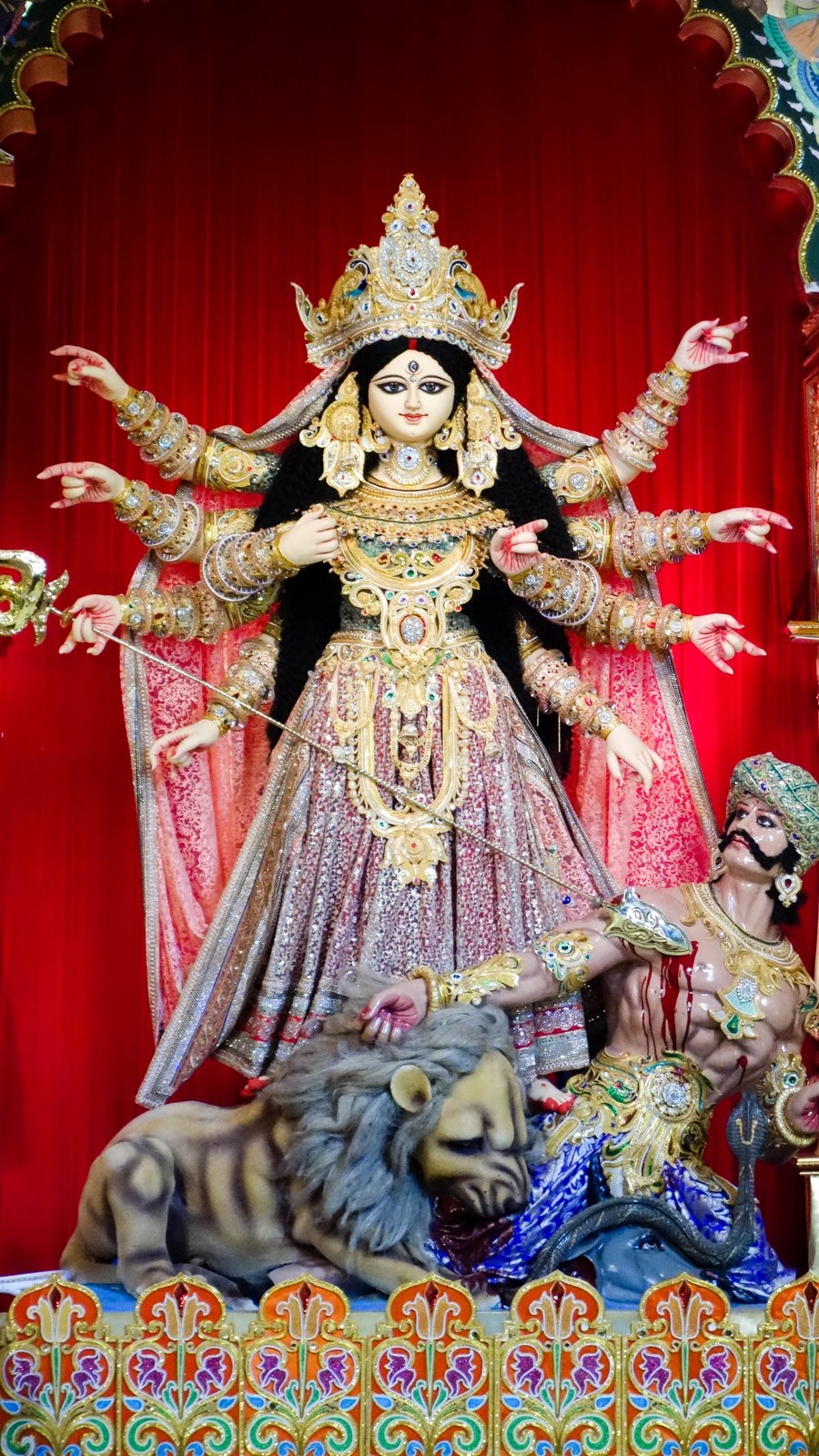
Each of the nine forms of Maa Durga, what she represents, and how she is worshipped on her day.
Navratri means nine nights, and each night honours a different form of the Goddess Durga, known together as the Navadurga. This Nashik Kumbh Yatra guide explains who each Devi is, what vehicle and form she is shown in, why she is worshipped, which mantra is chanted on her day, and what her form means in daily life. Sharad Navratri 2026 runs from 11 to 19 October, with Vijayadashami on 20 October. The information follows published Navratri sources and the Navadurga stotram. It is written for families planning their daily puja and for visitors who want to book a stay through nashikkumbhyatri.com.

Who Are the Navadurga?
The nine forms are one Goddess in many aspects. Each form is linked to a day of the festival and to a quality: strength, penance, courage, motherhood, protection, knowledge, purity and fulfilment. The published sources give the same nine names and broadly the same meanings. Iconography, vehicles and emphasis vary by region, and the details below are the most widely followed.
The Nine Devis at a Glance
| Day | Devi | Vehicle | Colour (2026) | Core meaning |
|---|---|---|---|---|
| 1 | Shailaputri | Bull | Orange | Nature, steadiness |
| 2 | Brahmacharini | On foot / lotus | White | Penance, restraint |
| 3 | Chandraghanta | Tiger | Red | Courage, peace |
| 4 | Kushmanda | Lion | Royal blue | Creation, light |
| 5 | Skandamata | Lion | Yellow | Motherhood, protection |
| 6 | Katyayani | Lion | Green | Justice, victory |
| 7 | Kalaratri | Donkey (tradition) | Grey | Removing fear |
| 8 | Mahagauri | White bull | Purple | Purity, forgiveness |
| 9 | Siddhidatri | Lion / lotus | Peacock green | Accomplishment |
Note: the colours and vehicles rest partly on tradition and painting. The same Devi can be shown differently in different regions.
The Nine Forms in Detail
Day 1 · Shailaputri
Shailaputri means 'daughter of the mountain'. In the Puranas she is known as Parvati, daughter of the Himalayas. She is shown holding a trident in her right hand and a lotus in her left, riding a bull. She stands for the steadiness of nature, patience and the root strength of the Goddess. The first day of Navratri is hers, so the day is seen as a time to begin something new.
- Vehicle: Bull (Vrishabha)
- Colour for the day: Orange (in the commonly followed 2026 sequence)
- Main meaning: The strength of nature, firm resolve and new beginnings
- Bhog or offering: Many families offer white flowers, akshat (unbroken rice) and a ghee lamp

Day 2 · Brahmacharini
Brahmacharini is the ascetic form of the Goddess. Stories tell that she performed severe penance to win Lord Shiva as her husband. She is shown in white, holding a japa mala in one hand and a kamandalu (water pot) in the other. This form represents restraint, sacrifice, devotion and the search for truth. On this day, devotees often resolve to control the mind and to live simply.
- Vehicle: No fixed vehicle; in many images she walks or stands on a lotus
- Colour for the day: White (in the 2026 sequence)
- Main meaning: Penance, restraint, devotion and the pursuit of knowledge
- Bhog or offering: Many families offer mishri (rock sugar), panchamrit or fruit

Day 3 · Chandraghanta
Chandraghanta has a crescent moon on her forehead shaped like a bell (ghanta), which gives her name. She rides a tiger or lion and her ten arms hold weapons. Her bell's sound is said to drive away the fears and obstacles of devotees. She is the power of courage, peace and protection, and on this day devotees pray especially for fearlessness.
- Vehicle: Tiger (sometimes a lion in other images)
- Colour for the day: Red (in the 2026 sequence)
- Main meaning: Courage, peace and freedom from fear
- Bhog or offering: Many families offer red flowers and sindoor
Day 4 · Kushmanda
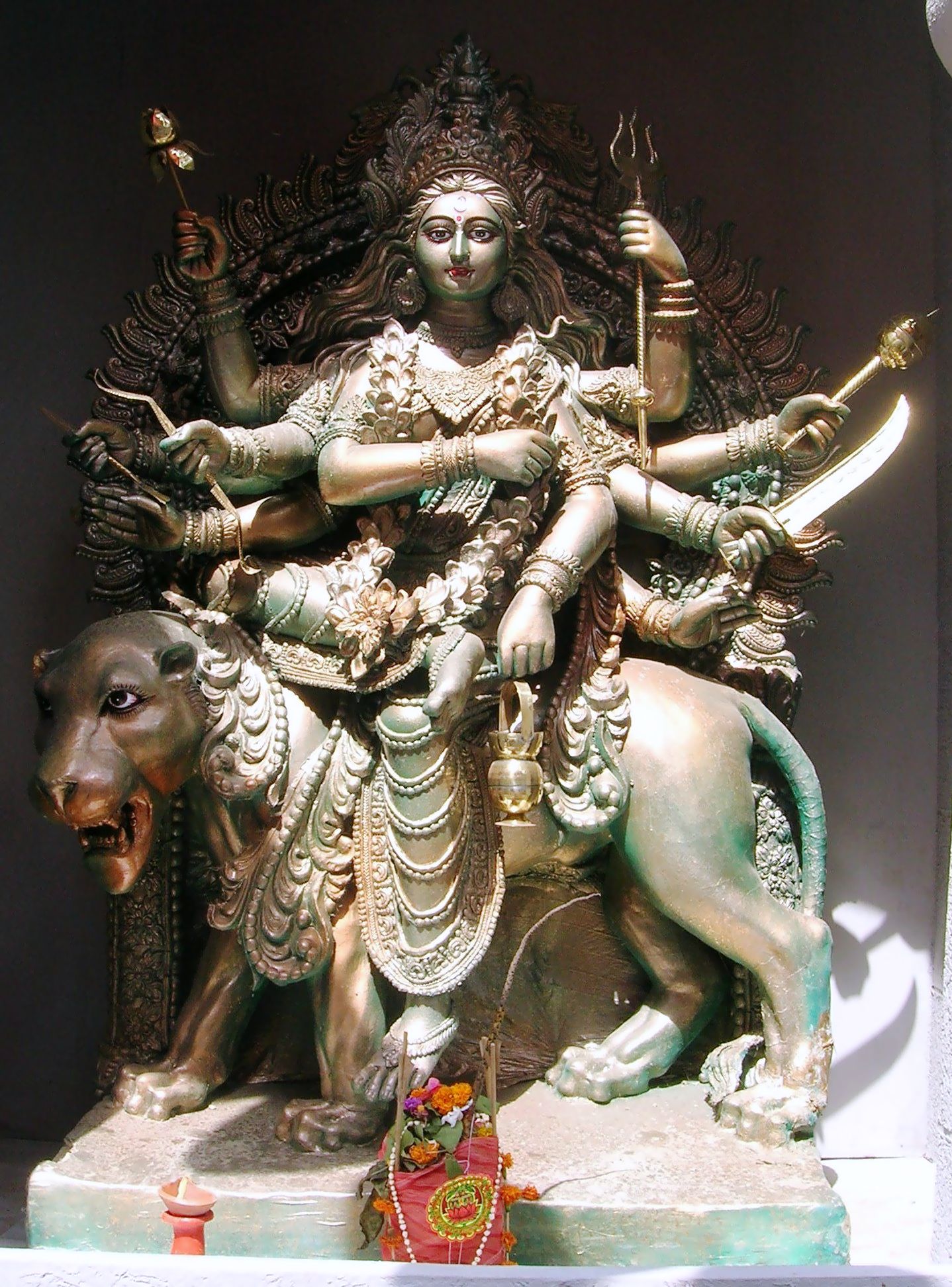
The name Kushmanda means 'one who created the universe with her smile'. Tradition says that when the world was in darkness, her gentle smile brought the cosmos into being. She rides a lion and her eight arms hold a kamandalu, bow and arrow, lotus, a pot of nectar and a japa mala. She is linked with energy, health and light.
- Vehicle: Lion
- Colour for the day: Royal blue (in the 2026 sequence)
- Main meaning: Creation, energy, health and light
- Bhog or offering: Many families offer pumpkin (kumhda) or malpua as bhog

Day 5 · Skandamata
Skandamata is the mother of Lord Skanda (Kartikeya). She is shown seated on a lion or a lotus with the child Skanda on her lap. Her four hands hold lotuses, the child, and one hand is raised in blessing. She represents motherly love, protection of children and the strength to guide them. On this day, mothers pray for the wellbeing of their families.
- Vehicle: Lion
- Colour for the day: Yellow (in the 2026 sequence)
- Main meaning: Maternal love, protection and the welfare of children
- Bhog or offering: Many families offer bananas or yellow flowers

Day 6 · Katyayani
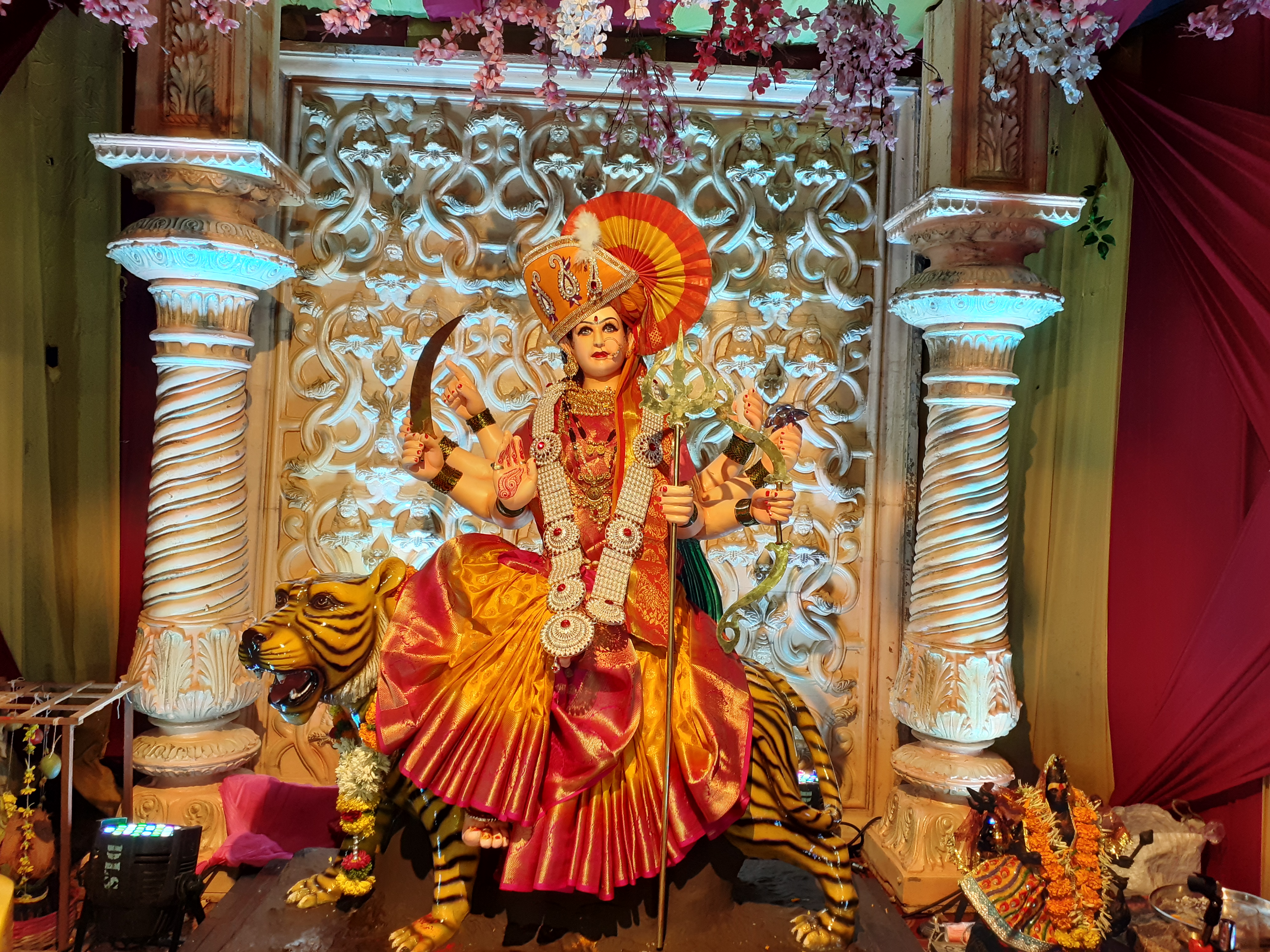
Katyayani was born from the penance of the sage Katyayana, which gives her name. In the story she took up arms to free the gods from the tyranny of the demon Mahishasura. She is shown riding a lion, holding a sword and a lotus. She stands for courage against injustice, the protection of truth and the victory of good over evil.
- Vehicle: Lion
- Colour for the day: Green (in the 2026 sequence)
- Main meaning: Justice, courage and victory over evil
- Bhog or offering: Many families offer honey or green leaves

Day 7 · Kalaratri
Kalaratri is the most fierce form of the nine. Her complexion is described as dark, her hair is loose, and she destroys darkness, ignorance and evil forces. In many traditions her vehicle is a donkey. Worship of this form is believed to remove fear and protect from negative forces. Many devotees keep a night vigil (jagran) on this day.
- Vehicle: Donkey (in many traditions)
- Colour for the day: Grey (in the 2026 sequence)
- Main meaning: The destruction of darkness, ignorance and fear
- Bhog or offering: Many families offer jaggery or sesame-based bhog
Day 8 · Mahagauri
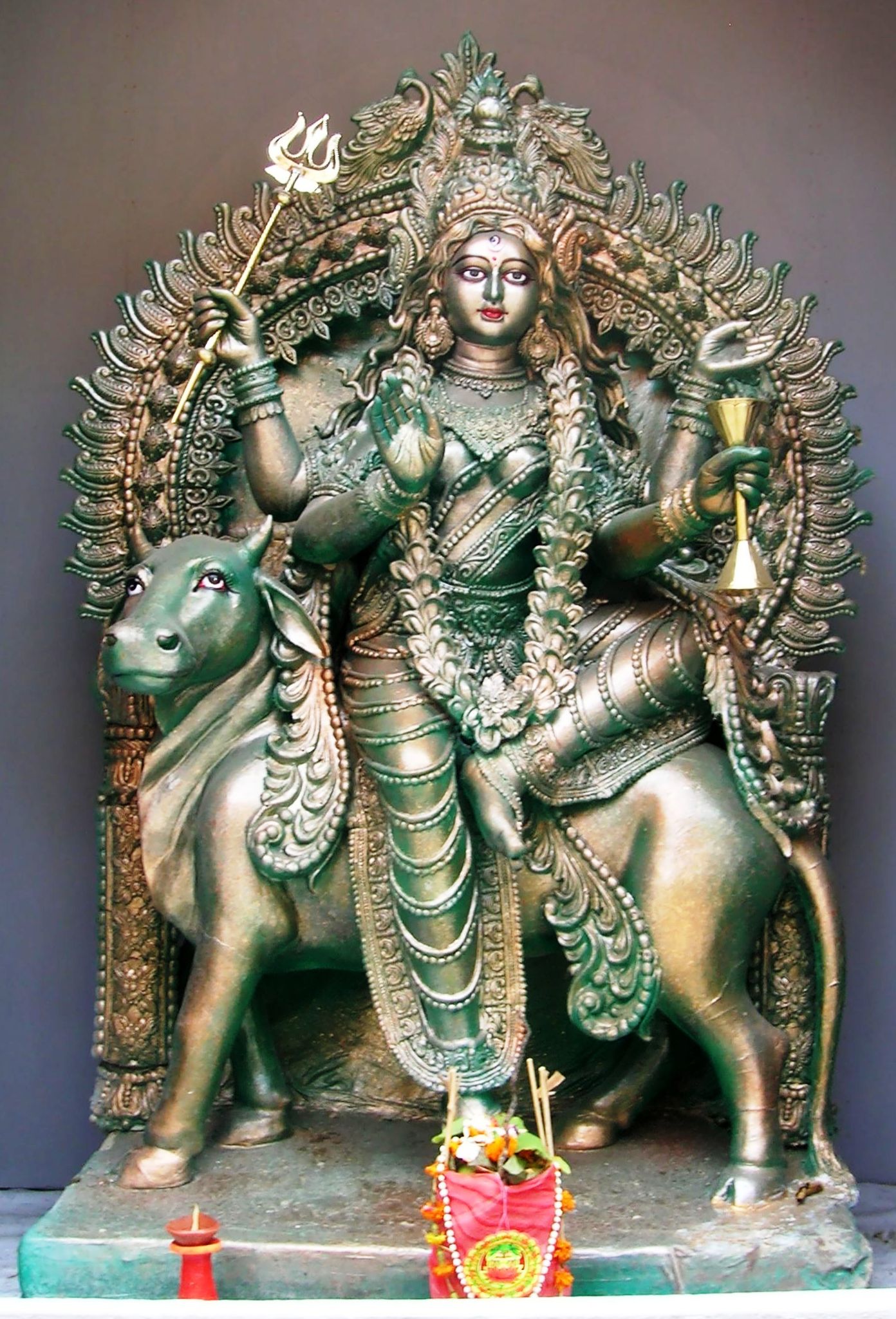
Mahagauri means 'the very fair one'. According to the story, her dark complexion from her austere penance was washed clean by the Ganga, and she became fair again. She rides a white bull and holds a trident, a damaru and makes the abhaya mudra (gesture of fearlessness). She represents purity, peace and forgiveness. The worship of Ashtami is associated with kanya puja.
- Vehicle: White bull (Vrishabha)
- Colour for the day: Purple (in the 2026 sequence)
- Main meaning: Purity, peace and forgiveness
- Bhog or offering: Many families offer coconut or coconut barfi
Day 9 · Siddhidatri
Siddhidatri grants siddhis, the spiritual powers and accomplishments. She is shown seated on a lotus and her four hands hold a mace, a discus, a conch and a lotus. Devotees believe her worship fulfils wishes. The ninth day completes the nine-day worship, and many families perform kanya puja and havan on this day.
- Vehicle: Lion or lotus (depending on the image)
- Colour for the day: Peacock green (in the 2026 sequence)
- Main meaning: Accomplishment, completion and the fulfilment of wishes
- Bhog or offering: Many families offer kheer, halwa or puri-chana

Why Maa Durga Is Worshipped as the Slayer of Evil
The story of Mahishasura is the reason the nine nights are celebrated. The demon had a boon that no man or god could kill him, and when he seized the heavens, the gods' combined energies took the form of Maa Durga. She fought him for nine days and nights, and on the tenth day, Vijayadashami, she defeated him. The Devi Mahatmya (Durga Saptashati) describes this battle, and many families read it during Navratri.
The Daily Rhythm of Navratri Worship
The basic pattern of puja is much the same in most homes. In the morning, bathe, light a lamp before the kalash or the picture of the Goddess, offer flowers and water, chant the mantra for the day, and do the aarti. In the evening, do the aarti again and, if you can, read or listen to the Durga Saptashati or the Navadurga stotram. Choose a fast that suits your health and family tradition: some keep a nine-day fast with fruit or water, others take one sattvik meal a day.
Kanya Puja on Ashtami and Navami
Kanya puja, the worship of young girls as forms of the Goddess, is common on Ashtami and Navami. Girls under about nine years old are invited, their feet are washed, they are fed puri, chana, halwa and sweets, and they are given dakshina or gifts. Some homes also invite a boy (Langur or Batuk). The custom varies by region, so follow your family's tradition.
Navratri Worship in Nashik
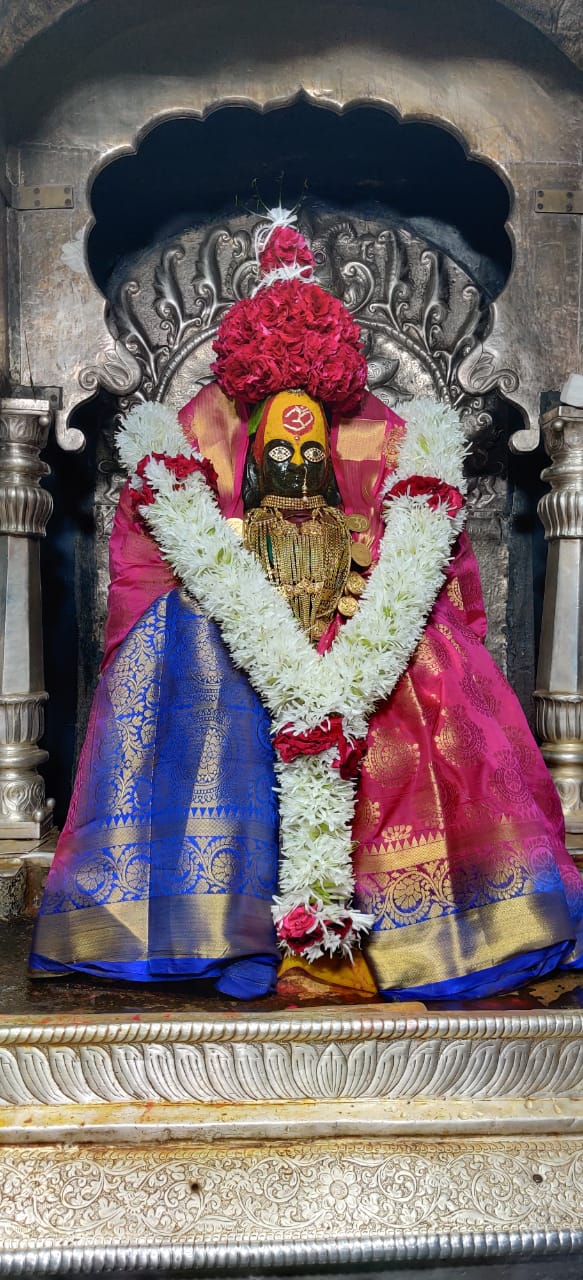
In Nashik, Navratri centres on home puja and on the temples. The Saptashrungi Devi temple at Saptashrungi Gad, where the Goddess is carved into the rock with eighteen arms, draws very large crowds in the spring and autumn festivals, and is counted among Maharashtra's most visited Devi shrines. Plan a visit early in the morning, check current darshan timings, and book a stay before the peak days.

Another of Maharashtra's major Devi shrines is Tulja Bhavani at Tuljapur, the family deity (kuldevi) of Chhatrapati Shivaji Maharaj.
Practical Points for the Puja
- Keep the image or picture clean and at a raised place, with a lamp lit regularly in front of it.
- Red, yellow and white flowers are the most commonly offered. Tulsi is traditionally not offered to Durga.
- Many families avoid meat, onion, garlic and alcohol through Navratri.
- Chant the mantra clearly and calmly; a japa mala helps you keep count.
Frequently Asked Questions
What are the nine forms of Durga?
Shailaputri, Brahmacharini, Chandraghanta, Kushmanda, Skandamata, Katyayani, Kalaratri, Mahagauri and Siddhidatri. One form is worshipped each day across the nine nights.
Which Devi is worshipped on the first day of Navratri?
Shailaputri, on the first day, which in 2026 falls on 11 October alongside Ghatasthapana.
Why is Kalaratri's vehicle a donkey?
Many traditions describe it this way, but not all. Images and idols vary by region.
Is there a fixed colour for each Devi?
Colours for each day are a popular custom with regional variation. Our colour guide sets out the commonly followed sequence for 2026 and its caveats.
Do I need to know all nine forms to worship?
No. Many families chant the Navadurga stotram or do the daily aarti. Knowing each form's meaning adds depth but is not required.
Is this guide an official source?
No. It is an independent guide built from published Navratri sources. Check temples and local authorities for official timings and notices.
Book hotels, dharamshalas, parking slots and restaurants in Nashik and Trimbakeshwar in one place — or just tell our AI assistant what you need.
Sources
Ready to plan your Kumbh Mela trip?
Book hotels, parking, and event passes near Ramkund in one AI chat.