Navratri 2026: Ghatasthapana Muhurat, Puja Samagri and Complete Guide
Sharad Navratri 2026 dates, ghatasthapana muhurat, puja samagri checklist, the nine days and Navratri celebration near Nashik.
Sharad Navratri 2026 begins on Sunday, 11 October with Ghatasthapana (kalash sthapana), and the nine nights run to 19 October, followed by Vijayadashami (Dussehra) on 20 October 2026. This complete Nashik Kumbh Yatra guide covers the ghatasthapana muhurat, the morning rules for the puja, the full puja samagri list, the daily routine for the nine days, Kanya Puja and havan, the visarjan on Vijayadashami, and where to celebrate Navratri near Nashik, including the hilltop Saptashrungi Devi temple. It is written for families setting up Navratri at home for the first time, and for travellers who want a stay they can trust through nashikkumbhyatri.com.
Navratri 2026 at a Glance
These dates come from current panchang publications. Confirm the exact muhurat for your city with your local panchang on the morning of 11 October.
| Date (2026) | Day | What falls on it |
|---|---|---|
| 11 Oct | Sunday | Pratipada — Ghatasthapana and the first day of Navratri (Shailaputri) |
| 12 Oct – 18 Oct | Mon – Sun | Days 2 to 8 of Navratri |
| 19 Oct | Monday | Day 9 — Siddhidatri; Navami and the end of Navratri |
| 20 Oct | Tuesday | Vijayadashami (Dussehra) |
How the tithis run: Navratri begins on Pratipada, the puja continues through Navami, and Dashami brings Vijayadashami. Kanya Puja and havan are commonly done on Ashtami and Navami, and their exact date can shift with the panchang, so check your own calendar.
Ghatasthapana Muhurat — When to Set Up the Kalash
Ghatasthapana is done in the morning while Pratipada (the first tithi) prevails. The Shubh Panchang notes that Pratipada begins at 9:19 pm on 10 October and ends at 9:30 pm on 11 October 2026. Drik Panchang states the rule plainly: the most auspicious time is the first one-third of the day, and it should not be done during Amavasya or at night.
Published muhurat for 11 October 2026 varies by city. Delhi is listed at 6:19 am to 10:12 am, Mumbai at 6:33 am to 10:48 am and Pune at 6:30 am to 10:45 am. We did not find a verified Nashik timing in the sources reviewed, so check your local panchang before you set up the kalash.
Before Ghatasthapana — Preparation
- Place: choose a clean, quiet and slightly raised corner of the home, away from footwear and foot traffic, and spread a clean red or yellow cloth.
- Soil: if you bring clay from outside, sieve it and clean out stones and debris before use.
- Bath: bathe and wear clean clothes before the ritual; it helps if the whole family is present.
- Samagri: gather everything the day before, so that the morning is not rushed.
Puja Samagri — Complete Checklist
The list below follows the standard ghatasthapana samagri in Drik Panchang's puja guide, with the everyday items most families add for the rest of the nine days.
| Item | Why it is used |
|---|---|
| Clay pot (ghat) and clean soil | The base in which barley is sown |
| Seven grains (sapta dhanya) or barley seeds | Sown in three layers; they sprout over the nine days |
| Small kalash (pitcher) with clean water | The vessel in which the Goddess is invoked |
| Sacred thread (moli), supari, coins, perfume | Tied to the kalash; offered as auspicious items |
| Five leaves (mango or ashoka) | Placed around the rim of the kalash |
| Unbroken rice, durva grass, flowers | Offered and placed in the kalash |
| Coconut wrapped in red cloth | Set on top of the kalash as the crown of the vessel |
| Red cloth, lamp (diya), ghee, camphor, incense | For the five-step puja (panchopachara) |
Extra items for the daily puja: mango leaves, fresh flowers, fruit and sweets for bhog, ghee or oil, cotton wicks, matchbox, incense sticks, kumkum, turmeric, roli, akshat and a clean plate.

The Ghatasthapana Vidhi — Step by Step
- Layer the pot: put soil in the clay pot in three layers, scattering seven grains or barley seeds on each layer, then cover lightly with soil.
- Set the kalash: tie the sacred thread around the neck of the small kalash, fill it with clean water, and drop in a supari, perfume, durva grass, whole rice and coins.
- Add the leaves: place five mango or ashoka leaves around the rim, and cover with a lid.
- Crown the kalash: wrap the coconut in red cloth, tie it with thread, and place it on top.
- Place it on the grains: set the kalash on the sown pot in the Pratipada window.
- Invoke the Goddess: ask Goddess Durga to be present in the kalash, then perform the panchopachara puja (lamp, incense, flowers, scent and food).

The Nine-Day Routine — How to Worship Each Day
The core order of worship stays the same across the nine days, but each day has its own form, mantra and colour. In many homes the routine looks like this:
- Morning: bathe, offer flowers and water at the kalash or the picture, chant that day's mantra, and do the aarti.
- Afternoon: offer bhog to the Goddess; many families cook fruit-based or sattvik food.
- Evening: light the lamp, do the aarti, and chant or sing together as a family.
- Night: read the Durga Saptashati or the Navadurga stotram if you can. A night vigil (jagran) is also a tradition.
Fasting: some keep a nine-day fast with fruit or water only, some take one sattvik meal a day, and others fast only on the first and last days. Choose according to your age, health and family custom. Pregnant women, the sick and the elderly are not expected to fast.
Navadurga Daily Forms
Each day's Devi, vehicle, colour and mantra is set out in our guide to the nine Devis and their significance. For the colour list and clothing, see the colour guide.
Kanya Puja and Havan — Ashtami and Navami
Kanya puja is common on Ashtami and Navami. Girls under about nine years old are invited, their feet are washed, they are fed puri, chana, halwa and sweets, and they are given dakshina or gifts. Some homes also invite a boy (Langur or Batuk). The custom varies by region.
Havan is another important Navratri practice. Many families hold a fire ritual on Navami or Ashtami, offering ghee, sesame, barley and samidha wood. If your home cannot hold a havan, you can take part in one at a temple or with a priest.
Where to Celebrate Navratri Near Nashik
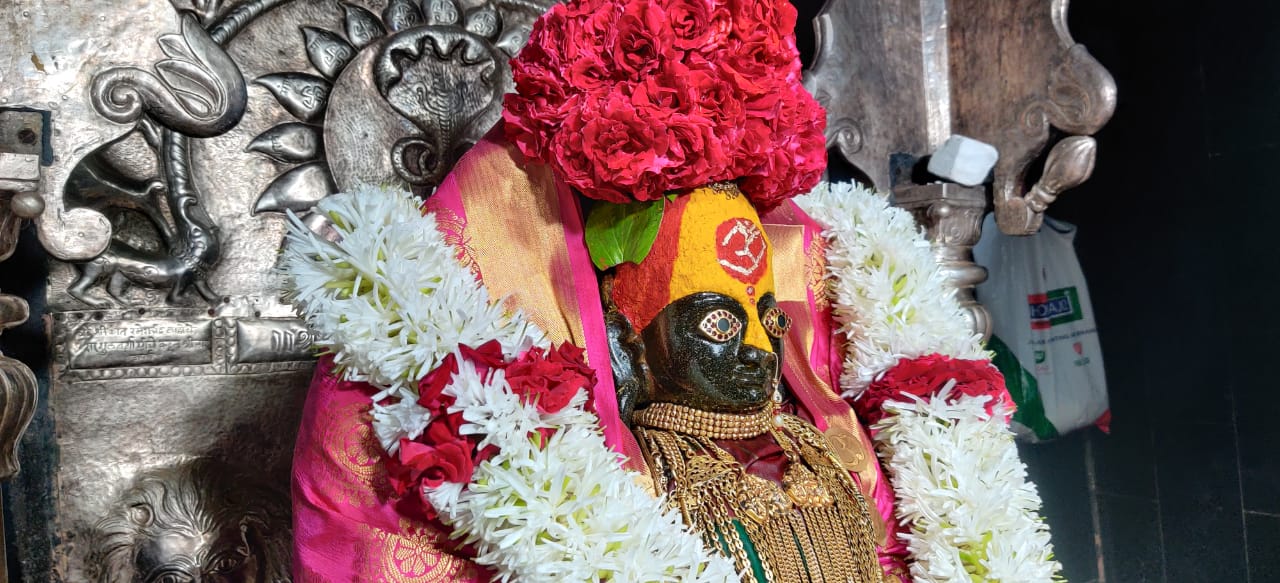
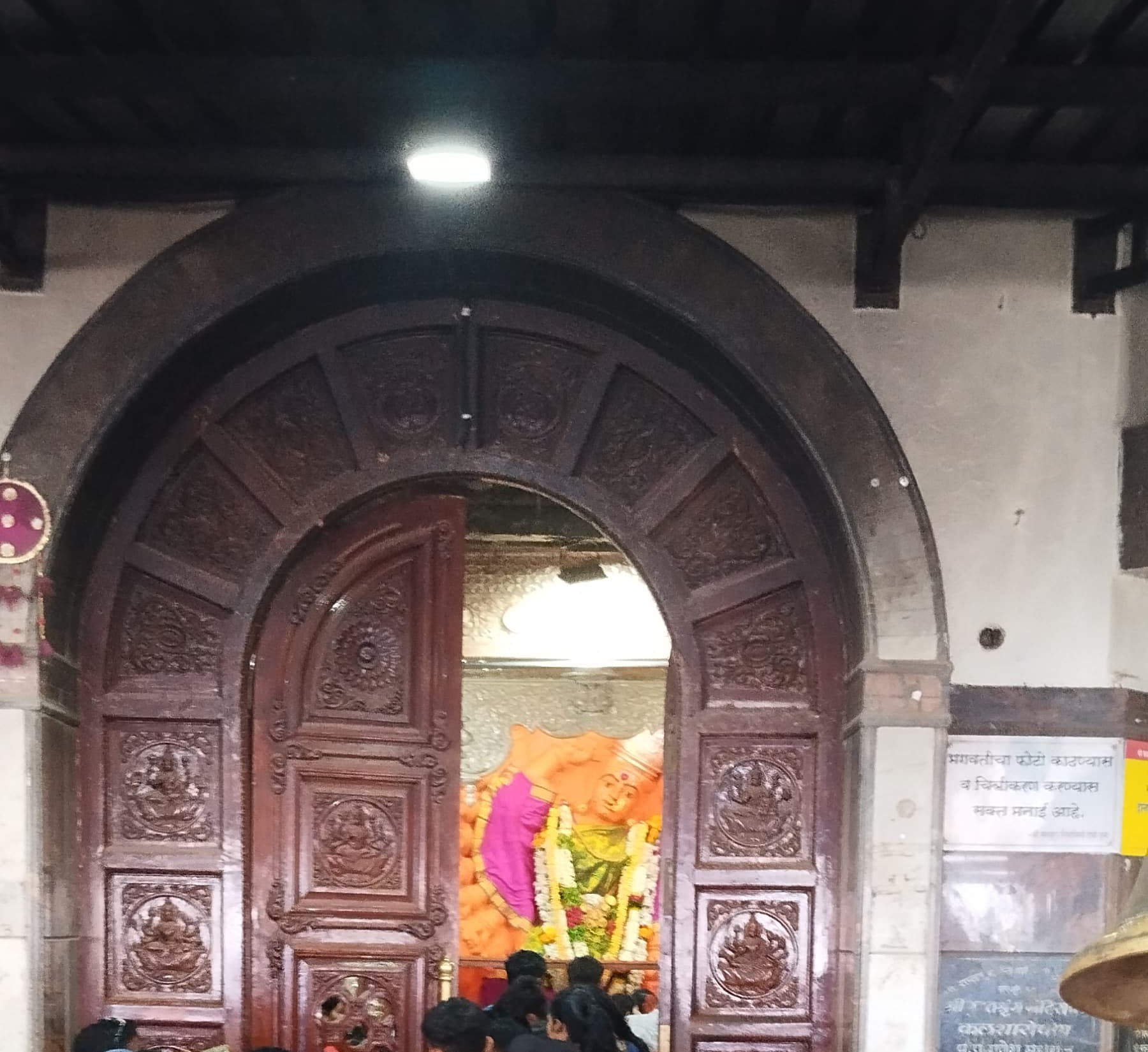
Saptashrungi Gad, in Nashik district about 60 km north of the city, is one of Maharashtra's most visited Devi shrines. The Goddess Saptashrungi Nivasini is carved into the rock and counted among the Shaktipeeths, and crowds are heaviest during the spring and autumn Navratri. Plan your stay in advance, keep water and a warm layer for the climb, and check the temple's current darshan timings before you travel.

Maharashtra's Three-and-a-Half Shaktipeeths
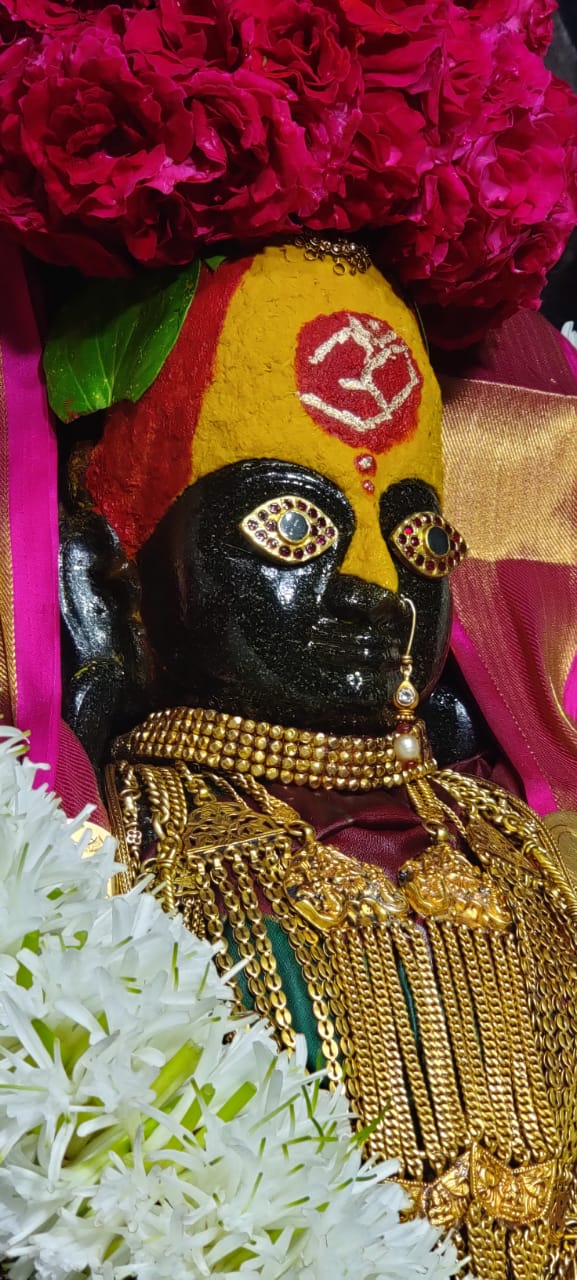
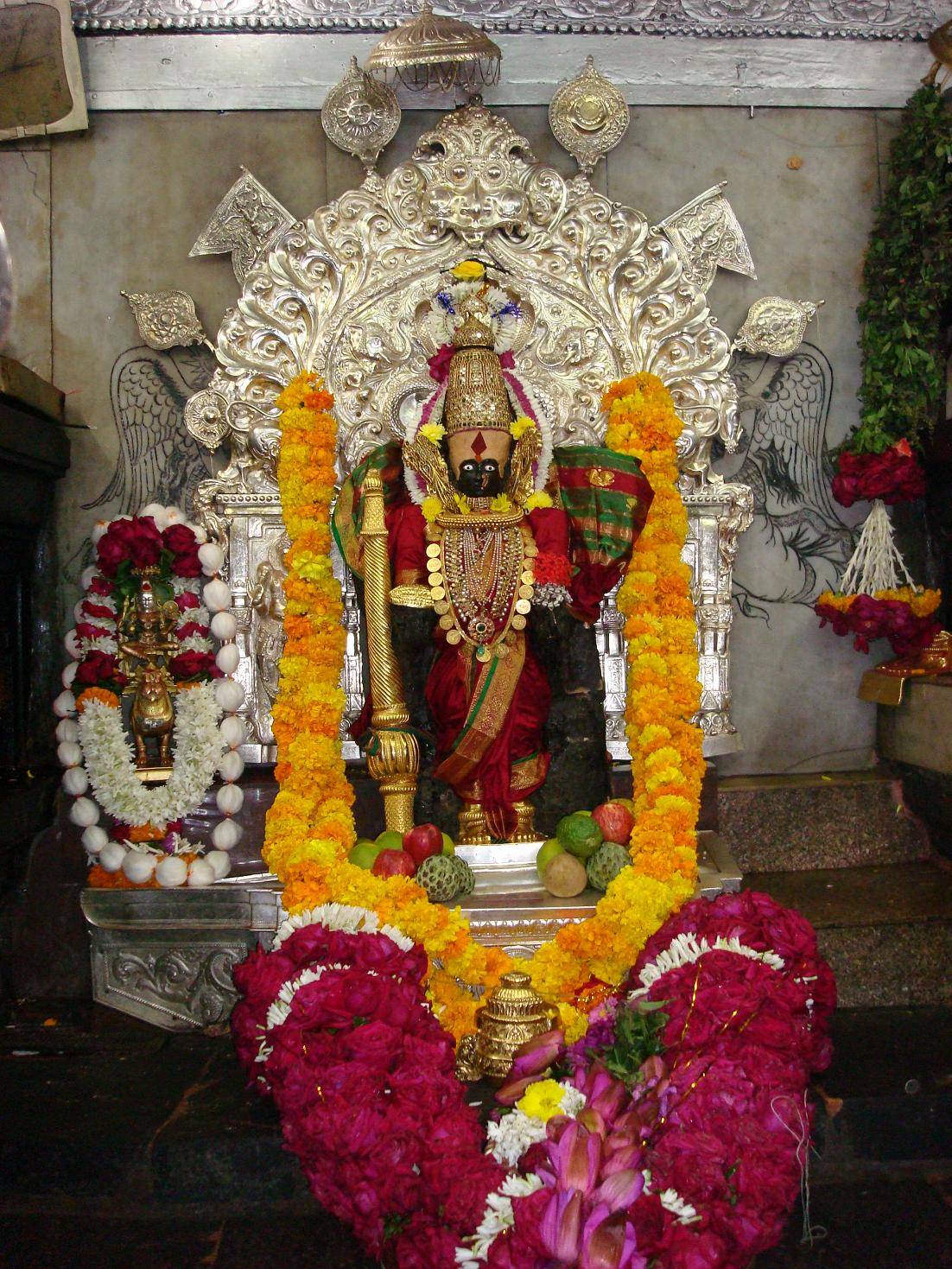
Maharashtra is home to what are called the three-and-a-half Shaktipeeths of the Goddess: Saptashrungi Devi near Nashik, Tulja Bhavani at Tuljapur, Mahalakshmi (Ambabai) at Kolhapur, and Renuka Devi at Mahur (counted as the 'half'). All four draw very large crowds during Navratri. Tulja Bhavani is regarded as the family deity (kuldevi) of Chhatrapati Shivaji Maharaj, and is closely linked to the Simollanghan and Shastra Puja traditions of Vijayadashami. The Mahalakshmi (Ambabai) temple at Kolhapur is counted among Maharashtra's oldest and most revered shrines.
Navratri Katha in Brief
The tradition behind the festival is the story of the buffalo demon Mahishasura, who had been granted a boon that no man or god could kill him. When the gods could not defeat him, their combined energies took the form of Maa Durga, who fought him for nine days and nights and defeated him on the tenth day, Vijayadashami. The full story is in the Ghatasthapana katha, arti and significance guide.

Vijayadashami — The Close and the Visarjan
After the Navami puja and havan, Vijayadashami on the tenth day celebrates the victory of good over evil. By custom, the kalash is taken for visarjan, and the barley sprouts that grew in the pot are shared within the family as prasad. Many homes also observe Shastra puja and Aparajita puja on this day. Decide the timing and method of visarjan according to your own family and local tradition.
Vijayadashami 2026: Tuesday, 20 October. The nine days of worship end on 19 October.
Frequently Asked Questions
When is Ghatasthapana in 2026?
Sunday, 11 October 2026, during Pratipada. Do it in the morning, not at night or on Amavasya. Check your local panchang for the exact time.
What is the most important item in the puja samagri?
The kalash with clean water and the barley or seven-grain seeds sown in the clay pot. The kalash is the vessel for invoking the Goddess.
Do I have to fast for all nine days?
No. Fasting is a personal practice, and families vary. Choose a level that suits your health and tradition.
When is Kanya Puja performed?
Commonly on Ashtami or Navami. The date can shift with the panchang, so confirm it in your own calendar.
When should the kalash be taken for visarjan?
By custom, on Vijayadashami. Many families take the kalash for visarjan on the tenth day after the nine days of worship; follow your household's tradition.
Where can I stay for Navratri near Saptashrungi?
Search for hotels and dharamshalas on Nashik Kumbh Yatra, and check the listing for distance, parking and check-in times before booking.
Is this guide official?
No. This is an independent guide built from published panchang and religious sources. For temple timings and official notices, check the temple or local authority directly.
Book hotels, dharamshalas, parking slots and restaurants in Nashik and Trimbakeshwar in one place — or just tell our AI assistant what you need.
Sources
- Navratri 2026: Date, 9 Days, Puja Timing, Significance, Fasting And Why People Wear Different Colours Each Day — Brut
- Navratri 2026: Date, Tithi, Puja Vidhi, Nine Days and Significance — Shubh Panchang
- Ghatasthapana Puja Vidhi — Drik Panchang
- Saptashrungi Gad — Incredible India
- Saptashrungi — Wikipedia
Ready to plan your Kumbh Mela trip?
Book hotels, parking, and event passes near Ramkund in one AI chat.