Lakshmi Puja 2026: Date, Shubh Muhurat, Puja Vidhi and Samagri
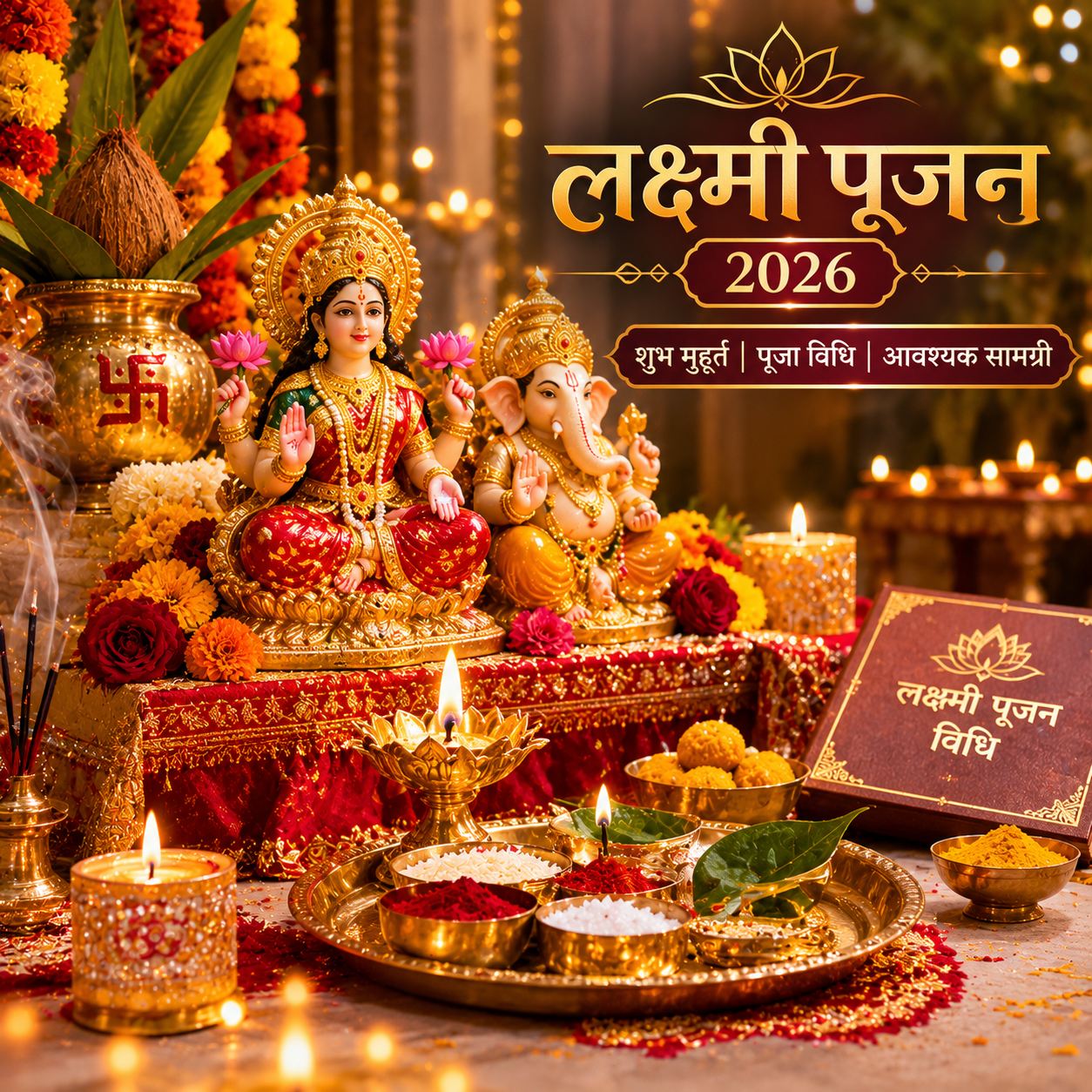
Lakshmi Puja is on Sunday, 8 November 2026, with the Nashik muhurat at 6:22–8:22 PM. The step-by-step puja vidhi and the complete samagri list.
Lakshmi Puja 2026 is on Sunday, 8 November 2026. In Nashik the best time is the Pradosh / Vrishabha (Sthir Lagna) window, 6:22 PM to 8:22 PM. The Amavasya tithi begins at 11:27 AM on 8 November and ends at 12:31 PM on 9 November (Drik Panchang, Nashik, IST).
Last updated: 3 November 2026
Lakshmi Puja 2026: date and muhurat
| Detail | 2026 (Nashik, IST) |
|---|---|
| Date | Sunday, 8 November 2026 |
| Amavasya tithi | Begins 11:27 AM on 8 Nov — ends 12:31 PM on 9 Nov |
| Lakshmi Puja muhurat | 6:22 PM to 8:22 PM (2 hours) |
| Pradosh Kaal | 5:57 PM to 8:30 PM |
| Vrishabha Kaal (Sthir Lagna) | 6:22 PM to 8:22 PM |
| Source | Drik Panchang, Nashik — read 3 Nov 2026 |
Tradition prefers the evening after sunset (Pradosh Kaal) on Amavasya, and within it the Sthir Lagna, the “fixed” Vrishabha ascendant, because it is believed that Lakshmi stays where the puja is done in a steady lagna. In Nashik both fall on the same two hours, 6:22–8:22 PM. Other websites show different windows (for example 5:47 PM for Delhi or 6:01 PM for Mumbai) because the sunset time of the city decides the muhurat — use a Nashik figure when you are in Nashik.
Who is worshipped on Diwali evening?
The puja is offered to Goddess Lakshmi for prosperity, Lord Ganesha who is worshipped first so that the puja is without obstacles, and in many homes Kubera, the keeper of wealth. In business families the account books (chopda) and tools of the trade are also worshipped. Some families add Goddess Saraswati; follow your own family tradition.
Lakshmi Puja samagri (puja items)
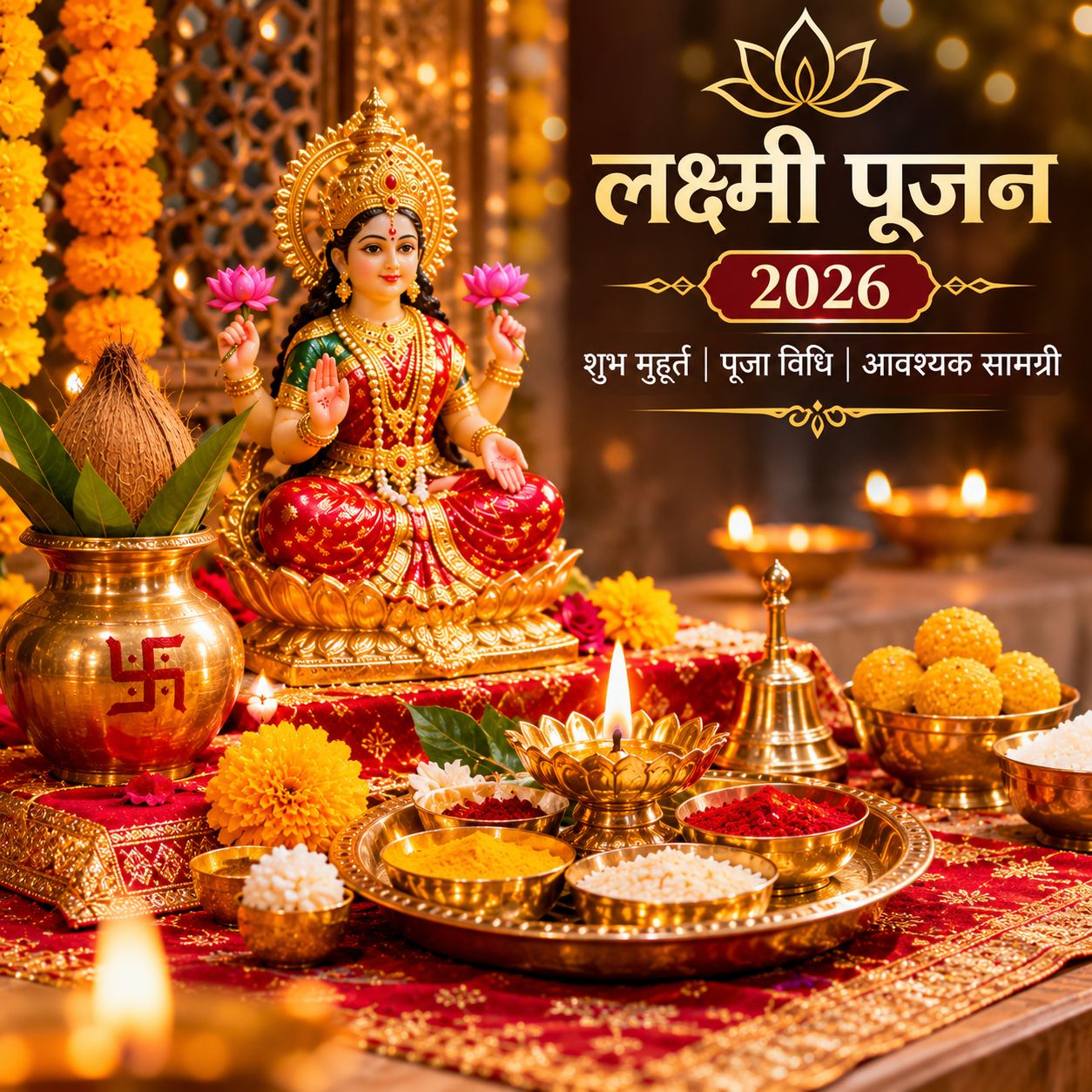
- Idol or framed picture of Lakshmi and Ganesha, and a Kubera yantra or picture if your family uses one
- A red or yellow cloth and a wooden chowki (a low seat)
- A kalash (brass or copper pot) with water, mango leaves and a coconut
- Rice (akshat), kumkum (roli), turmeric, sandalwood paste and holy thread (moli)
- Fresh flowers — lotus and marigold are preferred — and garlands
- Diyas with ghee or oil, cotton wicks, incense sticks and camphor
- Betel leaves with supari, fruits, coconut and sweets such as batasha, laddu or kheer
- In many Maharashtrian homes: puffed rice (lahya), batasha and coriander seeds with jaggery (dhane–gul) as naivedya
- Coins, silver coins or currency notes, and the account books if you worship them
Lakshmi Puja vidhi: step by step
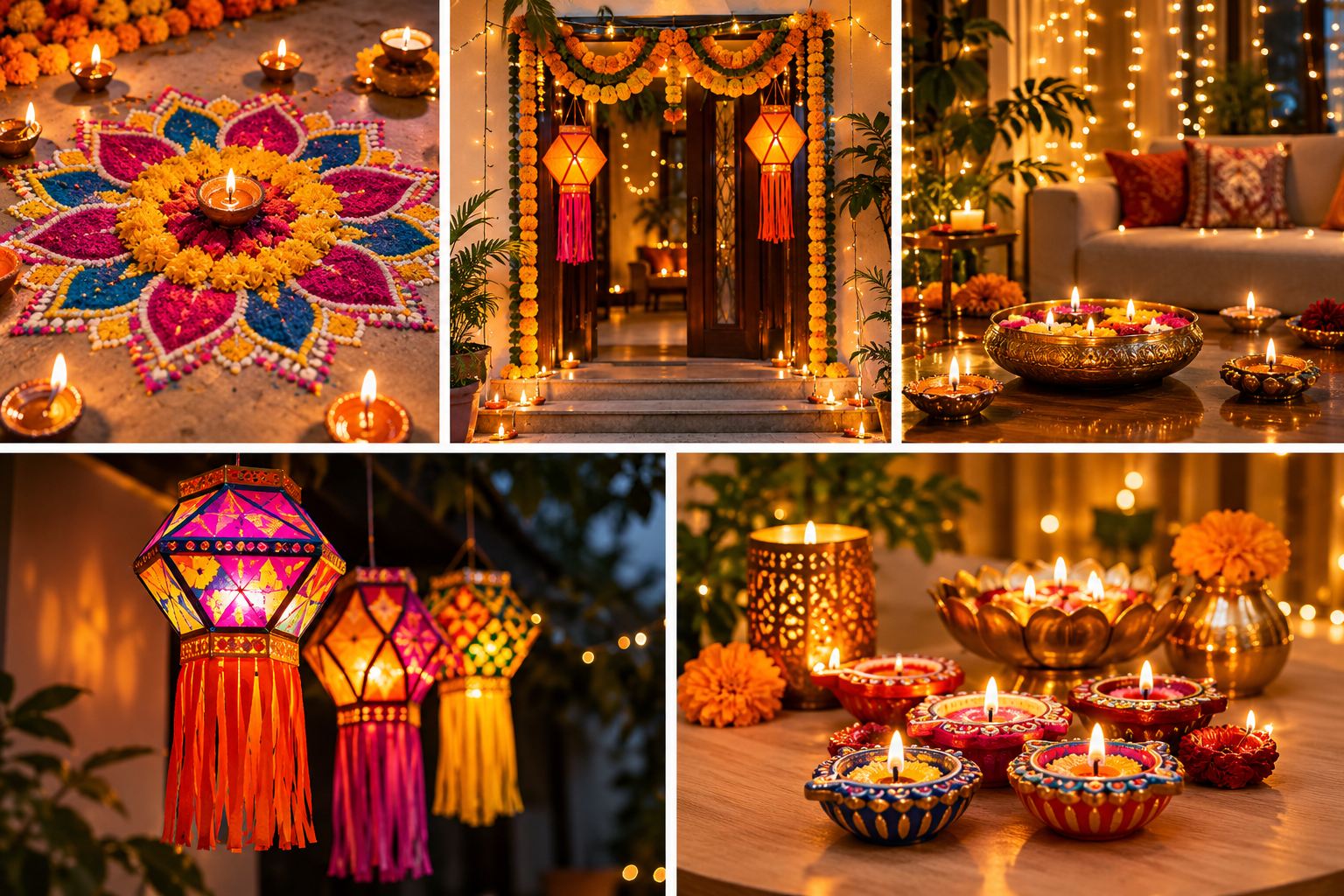
- Prepare the home. Clean the house, draw a rangoli at the entrance and light the diyas outside at sunset. Hang a toran of mango leaves on the door.
- Arrange the chowki. Spread the cloth, place the Lakshmi and Ganesha idols facing east or west, the kalash beside them, and the thali in front.
- Take the sankalp. Sit facing the idols, light the main diya and state the purpose of the puja in your own words.
- Worship Ganesha first. Offer a flower, kumkum and rice with “Om Gan Ganapataye Namah”.
- Invoke Lakshmi (avahan). Offer flowers, then bathe the idol or sprinkle water, apply kumkum and turmeric, and offer a garland and a lotus.
- Chant. “Om Shreem Mahalakshmyai Namah” is the commonly recited mantra; you may also read the Mahalakshmi Ashtakam.
- Offer the naivedya. Place the sweets, fruits and coins before the goddess and keep a diya burning.
- Do the aarti with camphor or a ghee lamp, ring the bell and offer the prasad to everyone at home.
- Conclude. Light diyas at the door, in the courtyard and near the tulsi. Many families keep the coins from the puja in the cash box or locker.
Why is Lakshmi worshipped on the new-moon night?
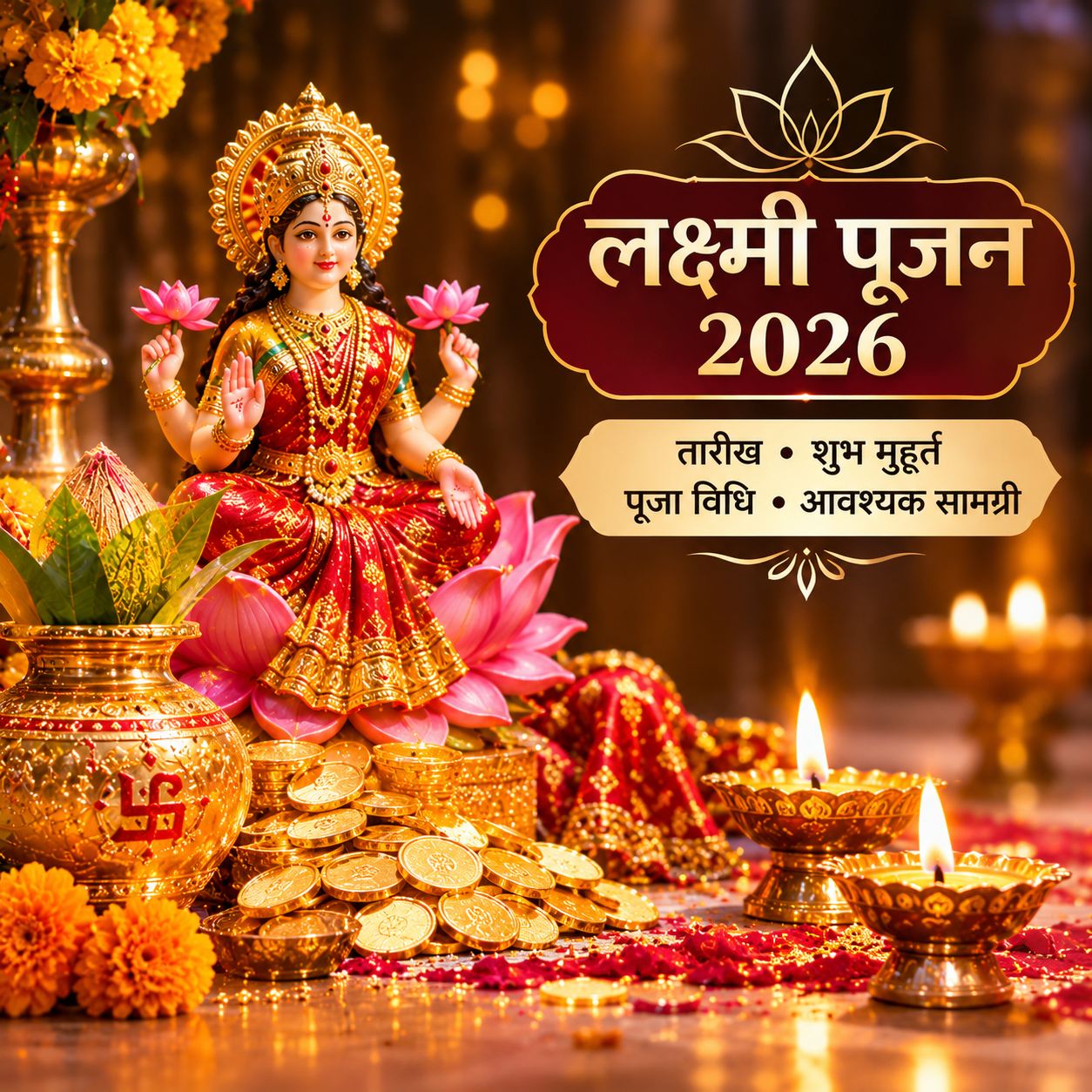
Amavasya is the darkest night of the month, and lighting lamps on it turns the night into a festival of light. According to tradition, Goddess Lakshmi visits clean, well-lit homes on this night, which is why the house is cleaned, the doors are kept open and diyas are lit everywhere. The kalash on the chowki stands for prosperity, the lotus for purity and the coins for the wealth that the family prays to use wisely.
Maharashtrian customs on Lakshmi Puja day
In Maharashtra the day has a few special touches. Many homes worship the broom (kersuni) because it keeps the house clean and is seen as a sign of Lakshmi’s arrival. Business families perform chopdi pujan, writing “Shubh Labh” and a swastika on the new account book and worshipping it with the pen and the cash box. The naivedya of lahya, batasha and dhane–gul is offered, and the faral is shared with neighbours and guests.
Dos and don’ts
- Keep the house clean and well lit from sunset; many families leave the main door open during the puja.
- Do the puja with a calm mind and with the whole family present, if possible.
- Do not rush: even a short puja done with devotion is considered complete.
- Avoid starting the puja before sunset; if you are travelling, do it as early in the Pradosh window as you can.
- These are traditional beliefs; they are not guarantees of any result.
Lakshmi Puja evening timeline (Nashik, 8 November)
| Time (IST) | What to do |
|---|---|
| Before 5:30 PM | Finish cleaning, draw the rangoli, set up the chowki and arrange the thali |
| 5:57 PM | Pradosh Kaal begins — light the diyas at the door and in the courtyard |
| 6:22 PM | Lakshmi Puja muhurat and Vrishabha Kaal begin — start the sankalp and Ganesha puja |
| 6:30–8:00 PM | Lakshmi avahan, naivedya, mantras and aarti |
| 8:22 PM | Muhurat ends — finish the aarti and offer the prasad |
| 8:30 PM | Pradosh Kaal ends — diyas lit, faral shared, family time |
Lakshmi Puja mantras and aarti
- Ganesha: “Om Gan Ganapataye Namah”
- Lakshmi beej mantra: “Om Shreem Mahalakshmyai Namah”
- Lakshmi Gayatri: “Om Mahalakshmyai cha Vidmahe, Vishnupatnyai cha Dhimahi, Tanno Lakshmih Prachodayat”
- Kubera: “Om Kuberaya Namah”
- Aarti: the traditional “Om Jai Lakshmi Mata” is sung with the diya and bell at the end of the puja.
Recite each mantra with devotion, 11 or 108 times if you wish, or simply once if time is short. The number is a custom, not a requirement. Your family priest may suggest additional verses such as the Shri Sukta.
Lakshmi Puja for shops and businesses
Business families worship Lakshmi along with the new account books (chopdi pujan), the cash box, the pen and the tools of the trade. A swastika and “Shubh Labh” are written on the first page of the new ledger. Shops often keep to the same evening muhurat as homes; if the shop closes late, many owners perform the puja at the shop first and then go home. Ask your priest if your business tradition has its own timing.
Common mistakes to avoid
- Starting the puja before sunset or leaving the house dark and untidy.
- Forgetting to worship Ganesha first.
- Rushing through the aarti because guests have arrived — keep the family together for it.
- Treating the puja as a deal: the festival is a prayer of gratitude and a reminder to use wealth wisely.
- Skipping the lamps at the door and near the tulsi, which are the signs that welcome Lakshmi.
After the puja
Let the diya burn as long as you can and keep the house lit for the night. Share the prasad and faral with the family and neighbours. The next morning is Govardhan Puja and Padwa (check your calendar), when husbands and wives exchange aukshan and gifts, and the festival ends with Bhai Dooj on 11 November.
Related Diwali guides
See the Diwali 2026 calendar and significance for all five days, and the Dhanteras 2026 guide for the day-before shopping and puja.
Frequently Asked Questions
What is the Lakshmi Puja muhurat in Nashik on 8 November 2026?
6:22 PM to 8:22 PM, which is both the Pradosh and the Vrishabha (Sthir Lagna) window. Pradosh Kaal lasts from 5:57 PM to 8:30 PM (Drik Panchang, Nashik, IST).
Can Lakshmi Puja be done outside the muhurat?
Tradition prefers the Pradosh / Sthir Lagna window, but many families who cannot be home at that time perform the puja later in the evening. Ask your family priest if your tradition has a specific rule.
Which gods are worshipped on Diwali night?
Goddess Lakshmi and Lord Ganesha are worshipped together; many homes also worship Kubera, and business families worship their account books.
Do I need a priest for Lakshmi Puja at home?
No. The puja can be done at home by the family using the steps above; a priest is called when a family prefers the full Vedic procedure or a specific sankalp.
Why does the muhurat differ between websites?
The muhurat depends on the sunset time of the city and on the calculation method, so websites using Delhi, Mumbai or Pune print different windows. Use the figure for your own city.
Which flowers are offered to Goddess Lakshmi?
Lotus is the most preferred flower, followed by marigold and rose. Offer fresh flowers and a garland; avoid flowers that have already wilted.
Can Lakshmi Puja be done in the afternoon?
Tradition prefers the Pradosh evening, so the afternoon is generally not used for the main puja. If you are travelling, you can do a short puja earlier in the evening or ask your priest for an alternative.
Is Lakshmi Puja done at shops and offices?
Yes. Business owners worship Lakshmi with the new account books, the cash box and the tools of the trade, usually in the same evening muhurat as homes.
What should be done with the puja coins and the diya after the puja?
Many families place the puja coins in the cash box or locker and let the diya burn out on its own. Follow your family’s custom.
Sources
Ready to plan your Kumbh Mela trip?
Book hotels, parking, and event passes near Ramkund in one AI chat.