Govatsa Dwadashi 2026: Date, Puja Muhurat and Vasu Baras Traditions
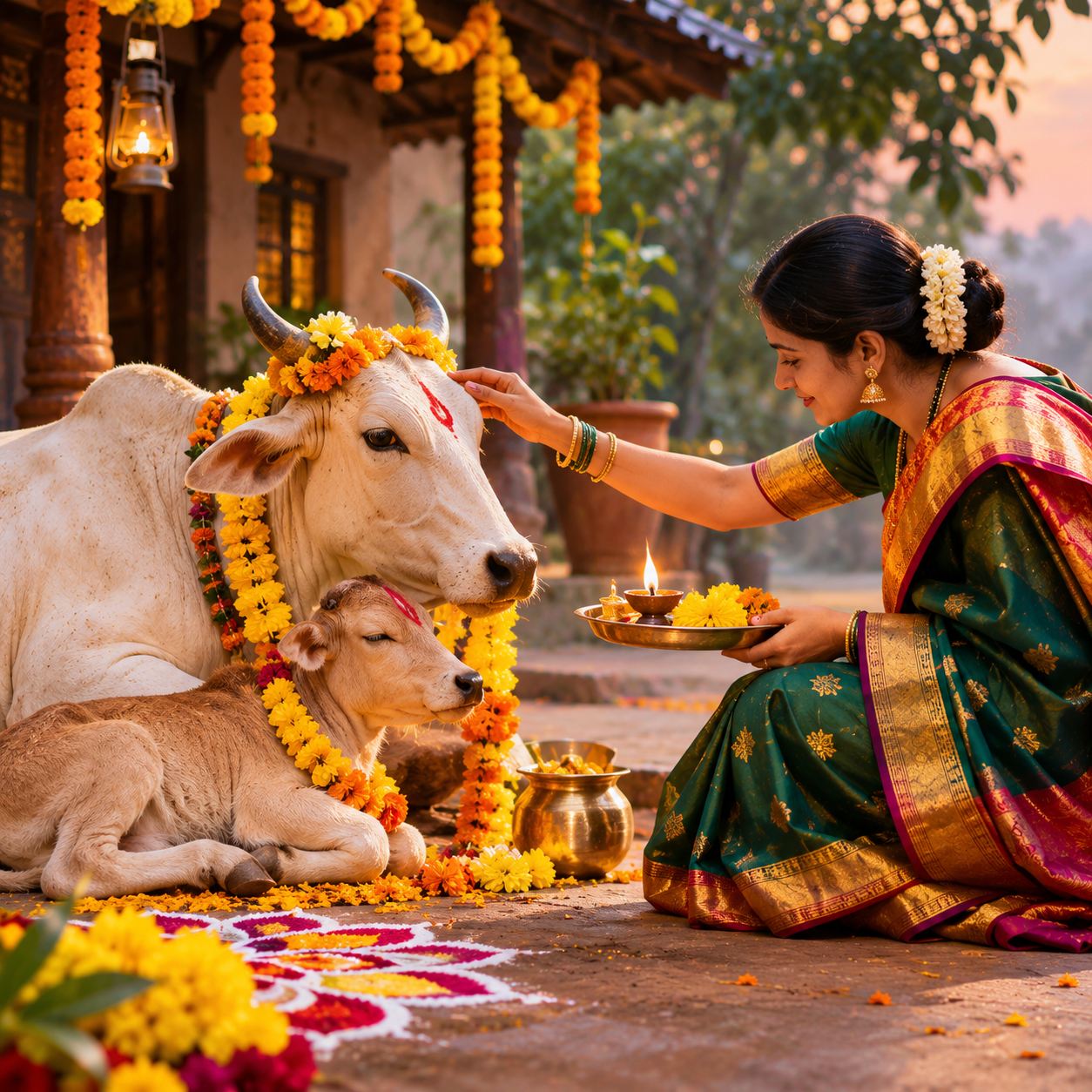
Govatsa Dwadashi (Vasu Baras) is on Thursday, 5 November 2026. Nashik muhurat 5:58–8:31 PM, cow-and-calf puja vidhi, samagri, story and food rules.
Govatsa Dwadashi, called Vasu Baras in Maharashtra, is on Thursday, 5 November 2026. It is the first day of Diwali, when a cow and her calf are worshipped in the evening. In Nashik the Dwadashi tithi runs from 10:35 AM on 5 November to 10:30 AM on 6 November, and the Pradosh puja muhurat is 5:58 PM to 8:31 PM (Drik Panchang, Nashik, IST).
Last updated: 3 November 2026
Govatsa Dwadashi 2026: date and muhurat
| Detail | 2026 (Nashik, IST) |
|---|---|
| Date | Thursday, 5 November 2026 |
| Dwadashi tithi | Begins 10:35 AM on 5 Nov — ends 10:30 AM on 6 Nov |
| Pradosh Govatsa Dwadashi muhurat | 5:58 PM to 8:31 PM (2 hours 32 minutes) |
| Best time for the cow puja | Evening, when the cows return home (go-dhuli vela) |
| Next day | Dhanteras, Friday 6 November |
| Source | Drik Panchang, Nashik — read 3 Nov 2026 |
The Dwadashi tithi begins in the morning of 5 November and the puja is done in the evening, so the festival falls on 5 November even though the tithi ends on the morning of 6 November. Some calendars may list 6 November; follow your family’s panchang if it differs.
What is Govatsa Dwadashi (Vasu Baras)?
Go means cow and vatsa means calf, so Govatsa Dwadashi is the “twelfth day of the cow and calf”. In Maharashtra the festival is better known as Vasu Baras (some tellings link vasu to the wealth and well-being a cow brings to a home; baras means twelve, for the twelfth tithi). In Gujarat the same day is called Vagh Baras. It is the first day of Diwali in Maharashtra, before Dhanteras.
The story behind Vasu Baras
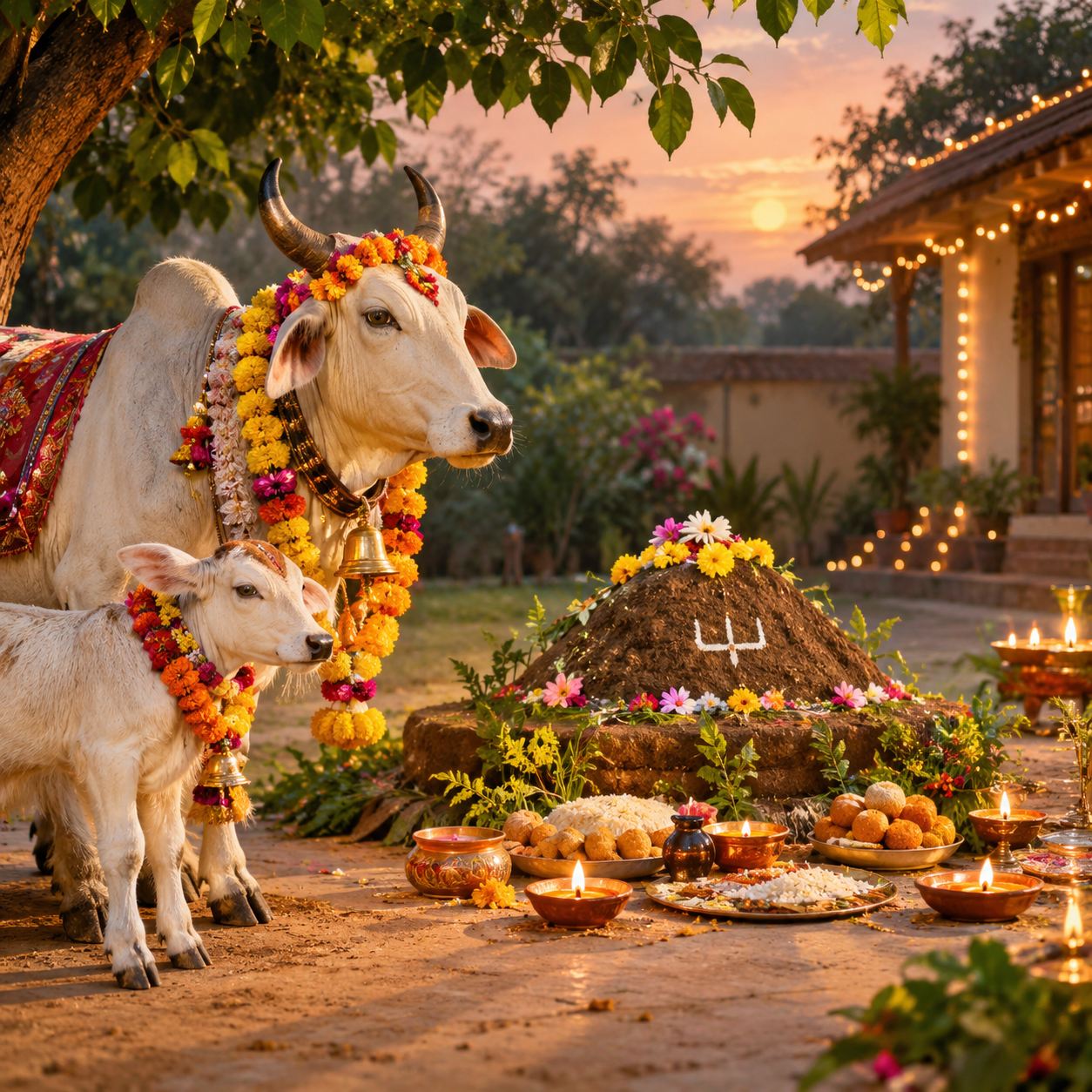
The story most often told is that of Kamadhenu, the wish-fulfilling cow that rose from the churning of the ocean (Samudra manthan). Her daughter Nandini lived in the hermitage of the sage Vasishtha and provided for his worship and his guests. Vasu Baras is said to honour Nandini and, through her, every cow that nourishes a household. The day is also associated with prayers for the well-being of children, which is why many mothers keep the vrat.
Vasu Baras puja vidhi at home: step by step
- Prepare the place. Clean the courtyard, draw a rangoli and light the first diya of Diwali near it.
- Bathe the cow and calf if possible, or wash their feet gently. Never force or frighten the animals.
- Garland and mark them. Put a marigold garland on each and apply turmeric and kumkum on the forehead.
- Offer the puja. Light a lamp, offer incense, flowers, akshata (rice) and water.
- Feed them. Offer fresh green grass, soaked moong or bajra and jaggery. Keep to food that is safe for cattle.
- Do the aarti and walk around the cow at a respectful distance from her legs.
- Pray for the well-being of your children and family. Then take the naivedya as prasad.
If you do not live near a cow, families use a clay, metal or picture image of a cow and calf, or visit a local goshala in the evening. Choose a quiet time, because crowds and noise stress animals.
Vasu Baras puja samagri (items)
- A cow and calf, or an image or small idol of both
- Marigold garlands and loose flowers
- Turmeric, kumkum and akshata (rice)
- A diya with oil or ghee, incense sticks and camphor
- A small brass pot with water (kalash) and a plate (thali)
- Fresh grass, soaked moong or bajra and jaggery for the animals
- Bajra bhakri with a vegetable (such as gavar), the common naivedya in many Maharashtrian homes
- Rangoli colours or rice flour
Vasu Baras food rules: what is avoided
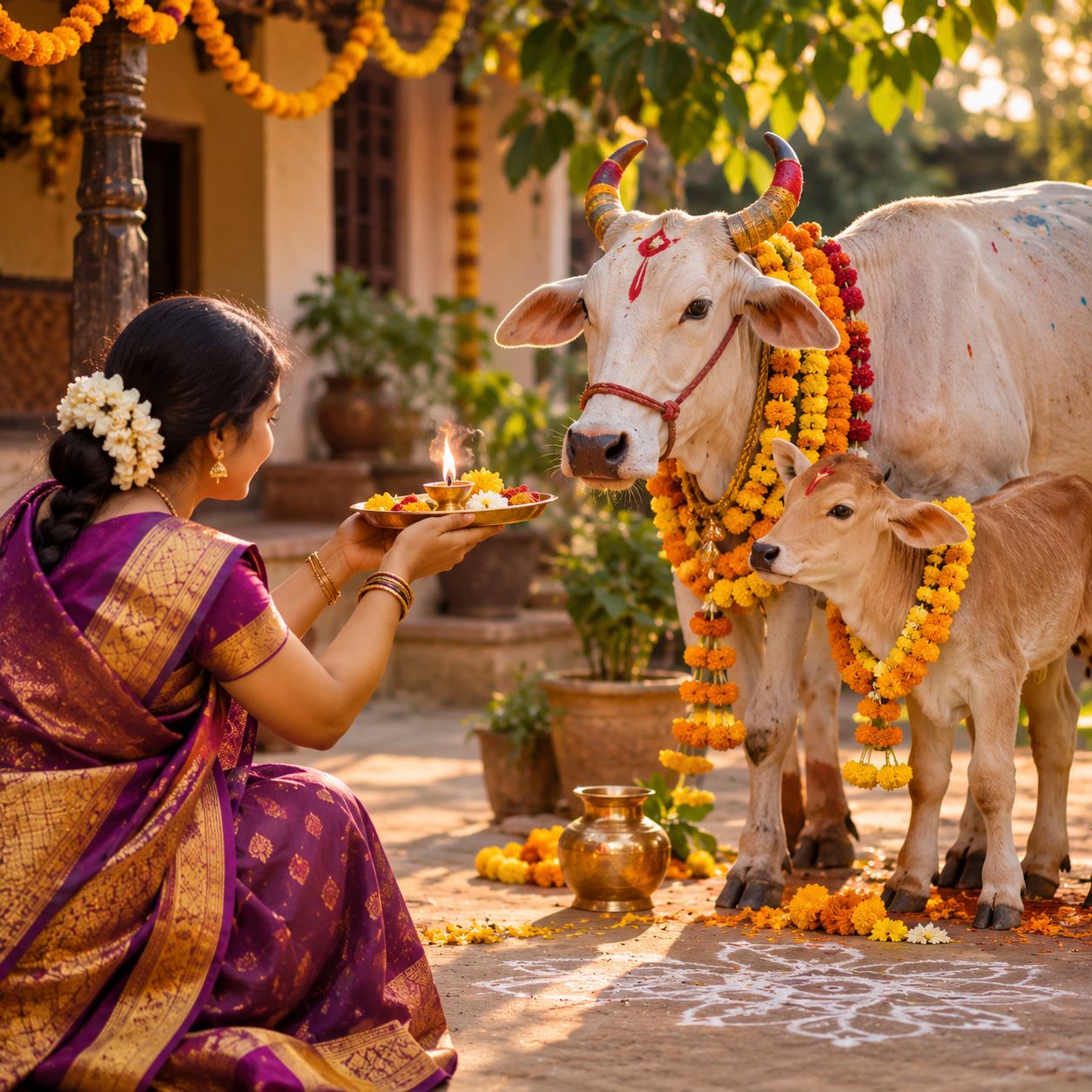
Many women who keep the vrat avoid wheat and cow’s milk products (milk, curd, ghee) on this day. The usual reason given is that the day’s milk belongs to the calf. Meals are typically built on bajra — bajra bhakri with vegetables such as gavar and moong. Practices vary by community and family, and these are customs rather than rules; people with health conditions should eat as their doctor advises.
Vasu Baras in Maharashtra and across India
| Place | Name and custom |
|---|---|
| Maharashtra | Vasu Baras — cow-and-calf puja in the evening; the first rangoli and diya of Diwali; bajra-based meal |
| Gujarat | Vagh Baras — the same day, begins the Diwali season |
| North India | Govatsa Dwadashi — worship of the cow and calf; fasting by mothers in some regions |
| Parts of South India | A related observance in honour of the cow Nandini |
This year some calendars list Rama Ekadashi on the same day, so a few families keep both observances. The Ekadashi fast rules apply separately; ask your family priest how to combine them.
Respecting animals during Diwali
- Do not tie a cow for long hours or crowd around her; a few people are enough.
- Avoid loud crackers near cattle and strays, which are frightened by noise.
- Offer fresh grass or soaked grains rather than cooked or sweet food, and never plastic-wrapped items.
- Do not offer leftover festival sweets or fried snacks, which are unsuitable for cattle.
Vasu Baras in Nashik: planning your evening
The Pradosh window for Nashik is 5:58 PM to 8:31 PM. Plan the puja soon after sunset, and keep the rangoli and first diya for the same time. This year Diwali falls in the opening weeks of the Nashik–Trimbakeshwar Simhastha Kumbh Mela, so expect more crowd and traffic than usual on the roads near Panchavati and Ramkund in the evening. See the Nashik Kumbh Guide for the Kumbh calendar.
What comes next
Dhanteras follows on 6 November; read the Dhanteras 2026 guide. For the whole festival, see the Diwali 2026 calendar and the Lakshmi Puja 2026 guide.
Frequently Asked Questions
When is Govatsa Dwadashi (Vasu Baras) in 2026?
Govatsa Dwadashi is on Thursday, 5 November 2026. In Nashik the Dwadashi tithi runs from 10:35 AM on 5 November to 10:30 AM on 6 November, and the evening Pradosh muhurat is 5:58 PM to 8:31 PM (Drik Panchang, IST).
Why is Vasu Baras the first day of Diwali in Maharashtra?
In Maharashtra the Diwali festival begins a day before Dhanteras with the worship of the cow and calf on Vasu Baras. The rangoli and the first diya of Diwali are usually lit on this evening.
What is the story of Vasu Baras?
The common story is of Nandini, the daughter of the wish-fulfilling cow Kamadhenu, who lived in the sage Vasishtha’s hermitage. The day honours Nandini and, through her, all cows.
What foods are avoided on Vasu Baras?
Many women who keep the vrat avoid wheat and cow’s milk products such as milk, curd and ghee, because the day’s milk is left for the calf. Meals are usually based on bajra. Customs vary by family.
What if we do not have a cow at home?
Families use a picture, clay or metal image of a cow and calf, or visit a nearby goshala at a quiet hour and offer fresh grass.
Is Vasu Baras the same as Govatsa Dwadashi?
Yes. Govatsa Dwadashi is the Sanskrit-derived name and Vasu Baras is the Marathi name for the same cow-and-calf festival on the Dwadashi tithi.
Why do mothers keep the Vasu Baras vrat?
The day is associated with the well-being of children, so many mothers fast for part of the day and pray for their children’s health.
What is offered to the cow on Vasu Baras?
Fresh green grass, soaked moong or bajra and jaggery, along with flowers, kumkum and a lamp. Offer only food that is safe for cattle.
Is it the same day as Rama Ekadashi in 2026?
Some calendars list Rama Ekadashi on 5 November as well, so a few families keep both observances. Ask your family priest how to combine them.
Sources
Ready to plan your Kumbh Mela trip?
Book hotels, parking, and event passes near Ramkund in one AI chat.