Lakshmi Ji Aarti (Om Jai Lakshmi Mata): Lyrics, Meaning and How to Perform It
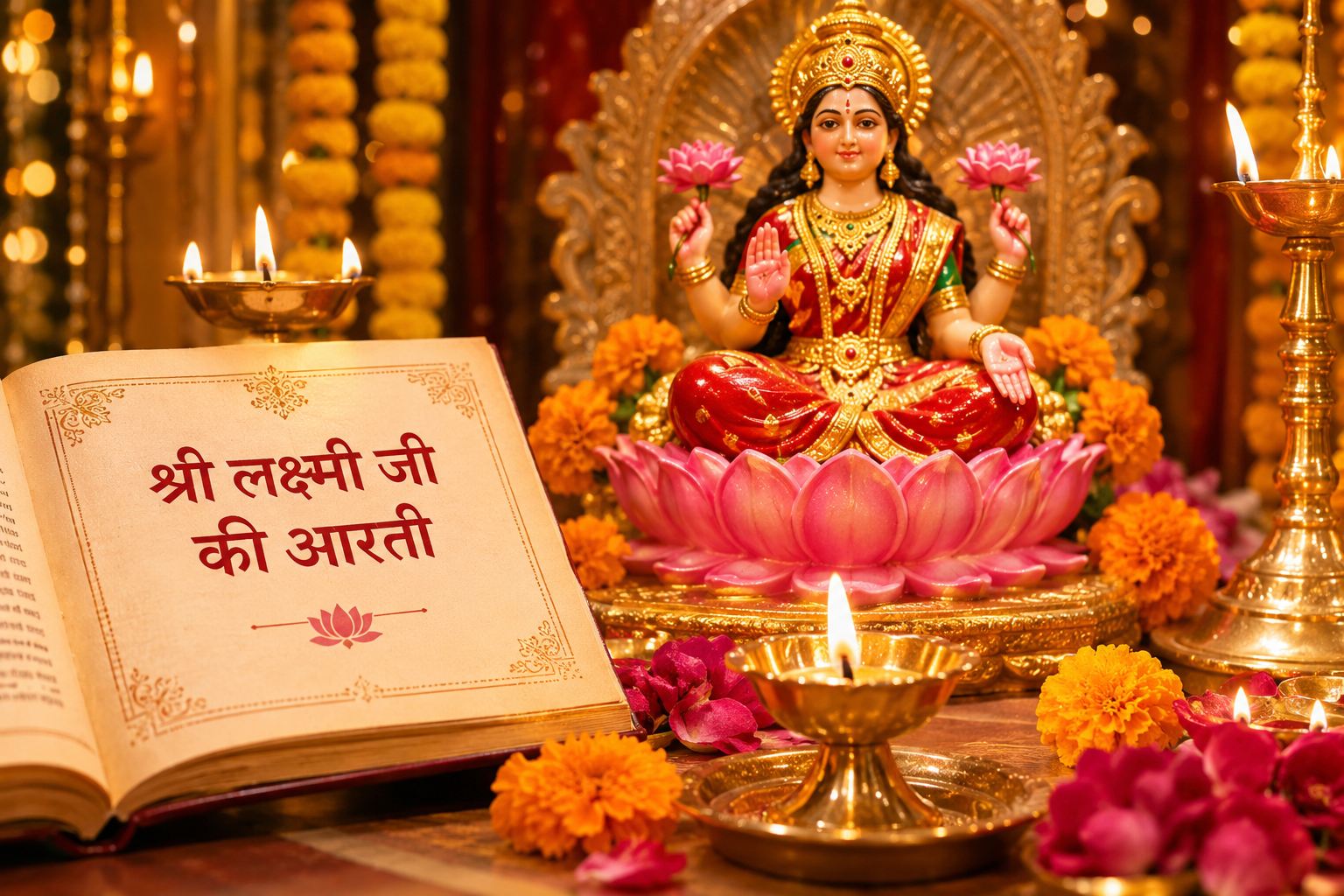
The complete “Om Jai Lakshmi Mata” aarti in Devanagari with transliteration and verse-by-verse meaning, the aarti thali and how to perform the aarti on Diwali 2026.
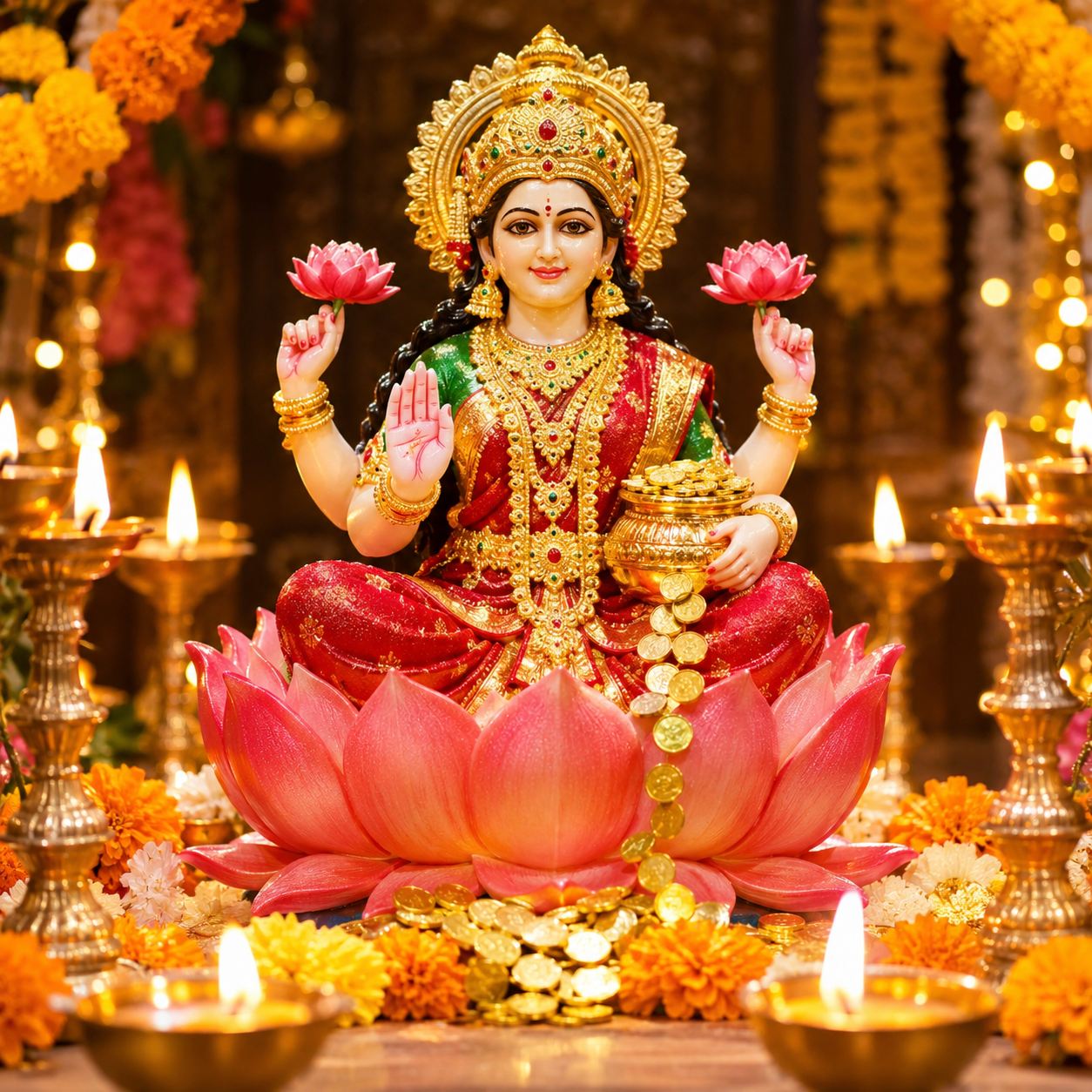
The most widely sung Lakshmi aarti is “Om Jai Lakshmi Mata”, sung at the end of the Lakshmi Puja while a lit diya is circled before the goddess. On Diwali 2026 the Lakshmi Puja muhurat in Nashik is 6:22 PM to 8:22 PM on Sunday, 8 November (Drik Panchang, IST). This page gives the full aarti in Devanagari with transliteration and a meaning for each verse, and how to perform the aarti step by step.
Last updated: 3 November 2026
What is an aarti and why is it sung?
An aarti is a devotional ritual in which a lit lamp is circled in front of a deity while a hymn of praise is sung and a bell is rung. It closes a puja: after the offerings, the devotees thank the deity with light and song. The flame is then passed around, and each person gently takes the warmth with their hands and touches their eyes. The aarti is for gratitude and togetherness, and the whole family usually joins.
Lakshmi aarti lyrics: “Om Jai Lakshmi Mata”
This is the traditional aarti in Hindi. The refrain “ॐ जय लक्ष्मी माता…” is sung again after each verse. Slightly different versions are in circulation across regions and printed books, so follow your family’s own aarti book where it differs.
| Hindi (Devanagari) | Transliteration | Meaning |
|---|---|---|
| ॐ जय लक्ष्मी माता, मैया जय लक्ष्मी माता। तुमको निसदिन सेवत, हर विष्णु विधाता॥ | Om jai Lakshmi mata, maiya jai Lakshmi mata. Tumko nisdin sevat, Har Vishnu vidhata. | Victory to Mother Lakshmi. Day and night you are served by Hara (Shiva), Vishnu and the Creator (Brahma). |
| उमा, रमा, ब्रह्माणी, तुम ही जग माता। सूर्य चन्द्रमा ध्यावत, नारद ऋषि गाता॥ | Uma, Rama, Brahmani, tum hi jag mata. Surya Chandrama dhyavat, Narad rishi gata. | You are Uma, Rama and Brahmani, the mother of the world; the Sun and the Moon meditate on you and the sage Narada sings your praise. |
| दुर्गा रूप निरंजनी, सुख सम्पत्ति दाता। जो कोई तुमको ध्यावत, ऋद्धि-सिद्धि धन पाता॥ | Durga roop niranjani, sukh sampatti data. Jo koi tumko dhyavat, riddhi-siddhi dhan pata. | In the spotless form of Durga you give happiness and prosperity. The devotional tradition says that whoever meditates on you gains riddhi-siddhi (fulfilment) and wealth. |
| तुम पाताल निवासिनी, तुम ही शुभदाता। कर्म-प्रभाव-प्रकाशिनी, भवनिधि की त्राता॥ | Tum patal nivasini, tum hi shubhdata. Karm-prabhav-prakashini, bhavnidhi ki trata. | You dwell in the nether world and give all that is auspicious. You reveal the effect of our deeds and are the saviour from the ocean of worldly life. |
| जिस घर में तुम रहती, तब सब सद्गुण आता। सब सम्भव हो जाता, मन नहिं घबराता॥ | Jis ghar mein tum rehti, tab sab sadgun aata. Sab sambhav ho jata, man nahin ghabrata. | In the house where you live, all good qualities come; everything becomes possible and the mind is not afraid. |
| तुम बिन यज्ञ न होते, वस्त्र न कोई पाता। खान-पान का वैभव, सब तुमसे आता॥ | Tum bin yagya na hote, vastra na koi pata. Khan-pan ka vaibhav, sab tumse aata. | Without you no sacrifice is performed and no one gets clothes; the abundance of food and drink all comes from you. |
| शुभ-गुण मन्दिर सुन्दर, क्षीरोदधि जाता। रत्न चतुर्दश तुम बिन, कोई नहिं पाता॥ | Shubh-gun mandir sundar, kshirodadhi jata. Ratna chaturdash tum bin, koi nahin pata. | You are the beautiful abode of virtues, born of the milky ocean. Without you no one obtains the fourteen jewels of the churning. |
| महालक्ष्मी जी की आरती, जो कोई नर गाता। उर आनन्द समाता, पाप उतर जाता॥ | Mahalakshmi ji ki aarti, jo koi nar gata. Ur anand samata, paap utar jata. | Whoever sings this aarti of Mahalakshmi is filled with joy, and their wrongs fall away. |
The line about gaining wealth is a devotional verse of praise and belief; it is not a promise of results.
The aarti in a few lines: what it says
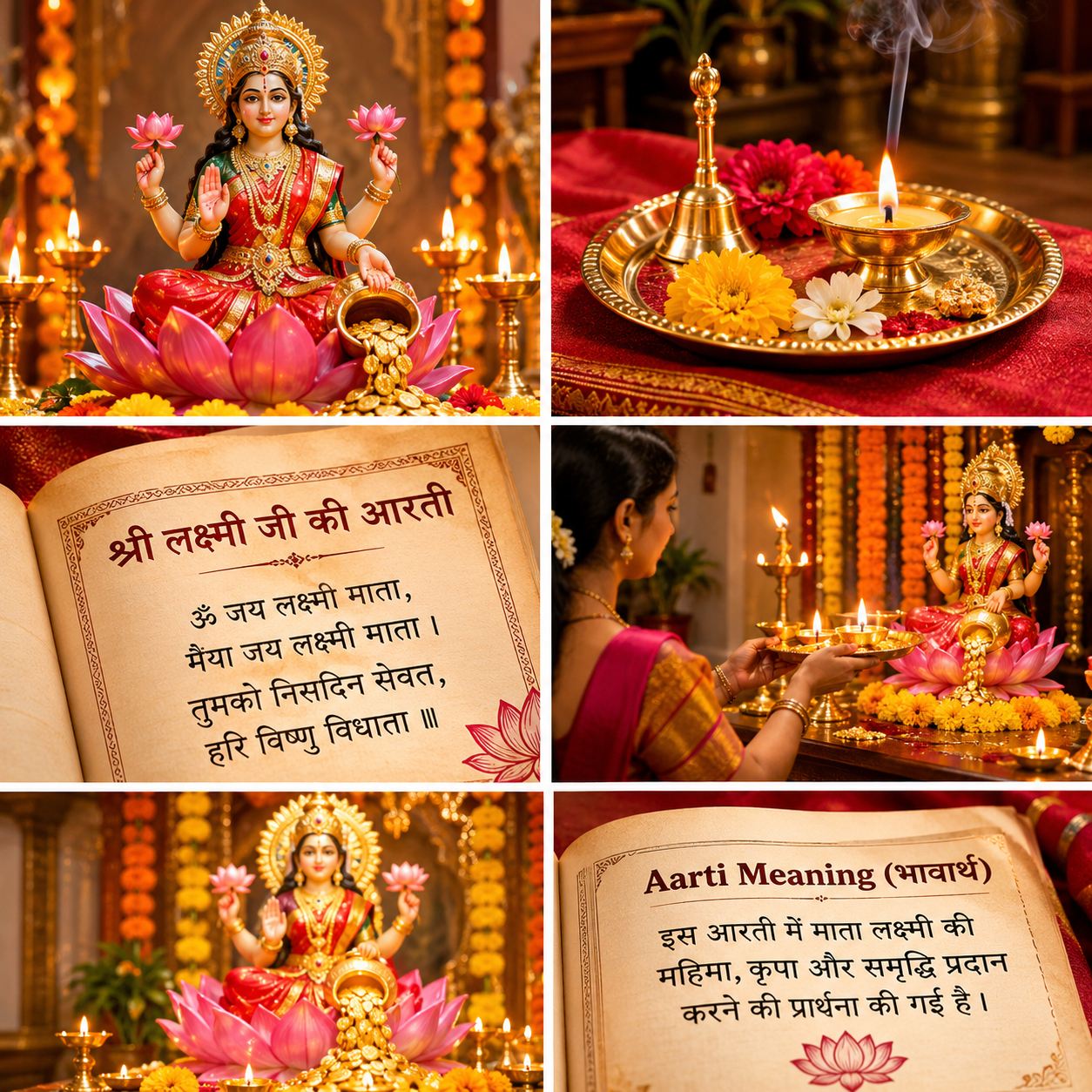
The aarti praises Lakshmi in three ways. First, as the mother of the world, one with Uma, Rama and Brahmani and served by the Trimurti. Second, as the giver of well-being, whose presence brings good qualities to a home and a mind free of fear. Third, as the source of abundance, without whom food, clothing and the fourteen jewels of the ocean-churning would not be obtained. Read this way, the aarti is a prayer of gratitude for the things that sustain a household.
How to perform the Lakshmi aarti: step by step
- Complete the puja first. Offer flowers, naivedya and the mantras, then prepare for the aarti.
- Prepare the aarti thali with a lit ghee diya, camphor, a bell, kumkum, rice and flowers.
- Gather the family. Everyone stands in front of the idol and joins in the singing if possible.
- Ring the bell and begin the song. Hold the thali in your right hand and sing “Om Jai Lakshmi Mata”.
- Circle the lamp clockwise in front of the goddess, usually three, five or seven times, or as your family does.
- Offer the flame to everyone. Pass the thali around and let each person take the warmth and touch their eyes.
- Conclude by offering flowers and a prostration, then share the prasad.
Aarti thali samagri (items)
- A brass or silver thali (aarti plate)
- A ghee diya with a cotton wick, or a camphor tablet
- A small bell (ghanti)
- Kumkum (roli) and akshata (rice)
- Fresh flowers and a small garland
- A cloth to hold the thali if it gets warm
- Prasad (sweets and fruit) to distribute after the aarti
When to sing the aarti on Diwali 2026
| Time (IST, Nashik) | Step |
|---|---|
| 5:57 PM | Pradosh Kaal begins — light the diyas and prepare the thali |
| 6:22 PM | Lakshmi Puja muhurat starts — sankalp, Ganesha puja, then Lakshmi avahan |
| About 7:45–8:15 PM | The aarti, near the end of the muhurat once the puja is complete |
| 8:22 PM | Muhurat ends — offer the flame and share the prasad |
The full evening plan is in our Lakshmi Puja 2026 guide.
Other Lakshmi prayers to know
- Lakshmi beej mantra: “Om Shreem Mahalakshmyai Namah”
- Lakshmi Gayatri: “Om Mahalakshmyai cha Vidmahe, Vishnupatnyai cha Dhimahi, Tanno Lakshmih Prachodayat”
- Ganesha before the puja: “Om Gan Ganapataye Namah”
- Some families also read the Shri Sukta or the Mahalakshmi Ashtakam; ask your priest.
Sing the aarti with your family
- Keep a printed copy or a phone with the lyrics, so children and guests can join.
- Sing slowly; the aim is togetherness, not performance.
- Keep the thali steady and away from curtains and flowers hanging near the flame.
- Children can ring the bell and carry the prasad.
- Do not worry if you do not know the tune: reading the lines with devotion is enough.
Related Diwali guides
Read the Lakshmi Puja 2026 muhurat and vidhi, the traditional customs for prosperity and the Diwali 2026 calendar.
Frequently Asked Questions
Which is the most popular Lakshmi aarti?
“Om Jai Lakshmi Mata” is the most widely sung aarti of Goddess Lakshmi and is sung at the end of the Lakshmi Puja on Diwali.
What is the meaning of “Om Jai Lakshmi Mata”?
It praises Lakshmi as the mother of the world, served by Shiva, Vishnu and Brahma, the giver of well-being and abundance, and says that those who sing it are filled with joy. A verse-by-verse meaning is given above.
When should the Lakshmi aarti be sung on Diwali 2026?
At the end of the Lakshmi Puja, within the muhurat of 6:22 PM to 8:22 PM on Sunday, 8 November 2026 in Nashik (Drik Panchang).
How many times is the lamp circled in the aarti?
Families commonly circle it three, five or seven times clockwise; follow your family’s custom.
Do I need to know the full aarti?
No. Reading it from a book or phone with devotion is enough, and the whole family can join in.
Is there a Marathi Lakshmi aarti?
Yes. Many Maharashtrian homes sing a Marathi Mahalakshmi aarti from their family aarti book, and the Hindi “Om Jai Lakshmi Mata” is also widely sung.
Sources
Ready to plan your Kumbh Mela trip?
Book hotels, parking, and event passes near Ramkund in one AI chat.